The Quick Answer (No Confusion Needed)
Let’s clear this up immediately: the correct spelling is “outing”, not “outting.”
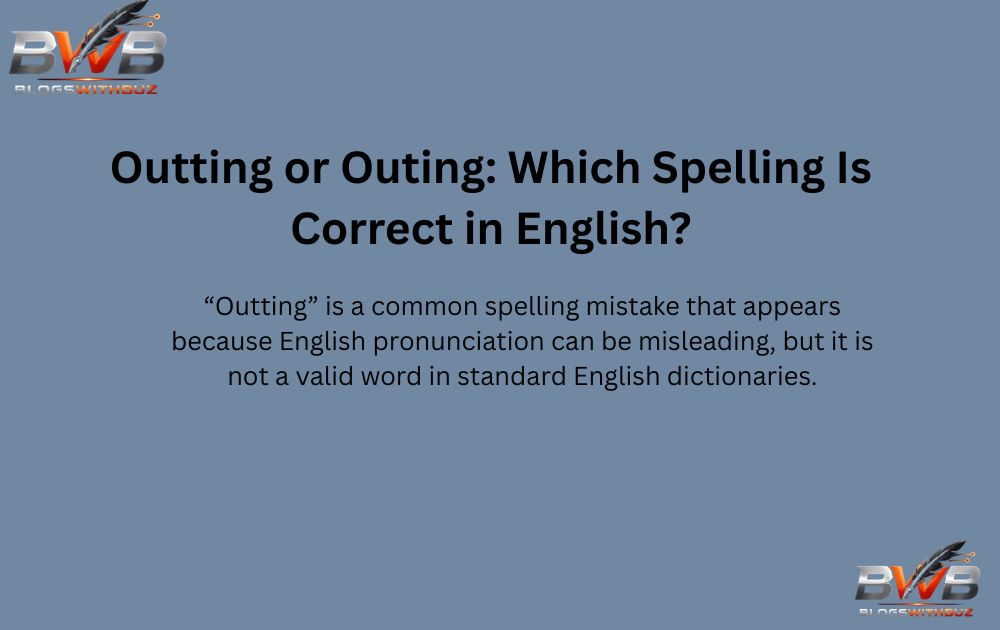
“Outting” is a common spelling mistake that appears because English pronunciation can be misleading, but it is not a valid word in standard English dictionaries.
On the other hand, “outing” is the correct and accepted spelling used in both British and American English.
So if you are writing an email, assignment, blog post, or professional document, always use:
- ✅ outing (correct)
- ❌ outting (incorrect)
Now that this is settled, let’s understand the word in depth so you never confuse it again.
What Does “Outing” Mean in English? (Two Key Meanings Explained)
The word outing is interesting because it has two completely different meanings depending on context. This is one of the main reasons people get confused when spelling or using it.
Meaning 1: A Social Trip or Group Activity
The most common meaning of outing is a short trip or planned activity outside the usual place of routine.
In simple terms, it refers to:
- A leisure trip
- A group activity
- A fun day outside home or office
Examples of social outings:
- A family picnic in the park
- A school trip to a museum
- A company team-building event
Example sentences:
- “We went on a family outing to the beach last Sunday.”
- “The company organized an outing for employees to improve bonding.”
In this sense, “outing” always has a positive and recreational tone.
Time Flies or Time Flys: Stop Making This Common Grammar Mistake
CIA or FBI: Who Has More Power and Which Is Higher?
Unphased or Unfazed? Guide to Choose the Right Word
Meaning 2: Revealing Private or Sensitive Information
The second meaning is more serious and often used in media, journalism, or social discussions.
Here, outing means exposing someone’s private identity or information without their consent.
This usage can be sensitive and controversial.
Example:
- “The article was criticized for outing the celebrity without permission.”
This meaning is commonly used in discussions about privacy, ethics, and media responsibility.
Why Context Changes the Meaning of “Outing”
The word “outing” can feel completely different depending on the situation:
| Context | Meaning |
| Family outing | Fun activity or trip |
| Office outing | Workplace event |
| Outing someone | Revealing private identity |
👉 This is why understanding context is just as important as spelling.
Why People Confuse “Outting” and “Outing”
Even though “outting” is incorrect, many people still write it. This happens for several logical reasons.
1. Influence of Double-Letter Words
English has many words with double letters:
- cutting
- getting
- hitting
- running
So the brain naturally assumes “outing” should also follow the same pattern.
2. Pronunciation Confusion
When spoken quickly, “outing” can sound like it has a stronger “t” sound, which tricks people into doubling the letter.
3. Typing and Fast Writing Errors
In fast typing, people often:
- Add extra letters accidentally
- Don’t proofread carefully
- Rely on memory instead of spelling rules
4. Autocorrect Limitations
Some writing tools do not immediately flag “outting,” which allows the mistake to go unnoticed.
Outting vs Outing: Key Differences Explained Simply
| Feature | Outting | Outing |
| Correct spelling | ❌ No | ✅ Yes |
| Dictionary status | Not valid | Recognized word |
| Usage | Error | Standard English |
| Context | Mistake only | Formal and informal use |
👉 Simple rule: Always use outing.
Origin and Evolution of the Word “Outing”
Understanding where the word comes from helps you remember it better.
Early Historical Meaning
The word “outing” originally appeared in the 19th century and was used to describe:
- Short outdoor trips
- Leisure journeys
- Recreational excursions
It was commonly used in travel writing and social descriptions.
How Modern Usage Developed
Over time, the meaning expanded beyond travel.
In modern English, “outing” also came to include:
- Organized events
- Social gatherings
- Workplace activities
- Public disclosure contexts
Key Language Insight
Language evolves with society. The word “outing” is a perfect example of how a simple travel term expanded into multiple meanings depending on culture and communication needs.
How to Use “Outing” Correctly in Real Sentences
Let’s see how native speakers actually use the word.
Everyday Conversation (Casual Use)
This is the most common usage in daily life.
Examples:
- “We’re planning a weekend outing with friends.”
- “The kids enjoyed their school outing.”
- “Let’s go for a beach outing tomorrow.”
Professional and Workplace Use
In business or formal communication, “outing” usually refers to team activities.
Examples:
- “The company arranged a team-building outing.”
- “Employee outings improve workplace morale.”
Sensitive or Media Context Use
This usage must be handled carefully.
Example:
- “The journalist was criticized for outing the individual without consent.”
👉 Always ensure ethical clarity when using this meaning.
Common Mistakes People Make (And How to Fix Them)
Incorrect Usage
The most common mistake:
- ❌ “We had an amazing outting yesterday.”
Correct Usage
- ✅ “We had an amazing outing yesterday.”
Easy Memory Trick
👉 “Outing has only ONE ‘t’ just like ONE trip.”
Simple, fast, and easy to remember.
Is “Outing” Formal or Informal English?
The word is actually neutral, meaning it can be used in multiple settings.
Informal Use
- Family outing
- Friends outing
- Weekend outing
Formal Use
- Corporate outing
- School outing
- Organized outing
Sensitive Use
When used in the sense of revealing private information, it becomes formal and serious.
Is There a Difference Between British and American English?
Good news: there is no spelling difference.
- UK English: outing
- US English: outing
👉 Both use the same spelling globally.
However, usage may slightly vary:
- UK English: more leisure-focused
- US English: broader usage including events and media contexts
The Dual Meaning of “Outing” Explained Clearly
Outing as a Social Activity
This is the positive and most common meaning.
Examples:
- School outings
- Picnic outings
- Weekend outings
Benefits:
- Reduces stress
- Improves relationships
- Encourages social bonding
Outing as Public Disclosure
This meaning is more sensitive.
Important points:
- Often used in journalism
- Can involve ethical concerns
- Requires consent and caution
What Search Trends Reveal About “Outing vs Outting”
Search behavior shows a clear pattern:
- Many users search “outting” due to confusion
- Most are looking for correct spelling
- A large portion also searches meaning and usage
👉 This shows a full learning journey:
- Spelling confusion
- Meaning clarification
- Usage understanding
Quick Comparison: “Outing” vs Similar Words
| Word | Meaning | Best Use |
| Outing | Short social trip | Casual/group events |
| Trip | Travel journey | General travel |
| Event | Organized occasion | Formal settings |
| Gathering | Social meeting | Informal meetups |
👉 Simple rule: Use “outing” for fun, short, social activities.
Key Takeaways (Quick Summary)
- “Outing” is the correct spelling
- “Outting” is always incorrect
- The word has two meanings depending on context
- It is used in both formal and informal English
- Context decides tone and meaning
Trusted Grammar Reference
According to standard dictionary usage (Cambridge-style definitions), “outing” is the only recognized form of the word.
Frequently Asked Questions (FAQs)
Is it spelled outting or outing?
The correct spelling is outing. “Outting” is incorrect.
What does outing mean in English?
It can mean a social trip or revealing private information.
Is outting a real English word?
No, it is not recognized in dictionaries.
How do you use outing in a sentence?
“We went on a fun outing to the park.”
What is a family outing?
A family outing is a trip or activity done together for enjoyment.
What does outing someone mean?
It means revealing someone’s private identity without permission.
Why do people misspell outing as outting?
Because of pronunciation and similar double-letter words.
Is outing formal or informal English?
It can be both, depending on context.
Final Conclusion: Which Spelling Should You Use?
At this point, the answer is very clear: always use “outing.”
The spelling “outting” is simply a common mistake caused by pronunciation confusion and English spelling patterns.
More importantly, the word “outing” is flexible. It can describe a fun social trip or a serious act of revealing private information, depending entirely on context.
So remember this simple rule:
👉 One “t” = correct
👉 Two “t”s = incorrect
Stick with “outing,” and you will always be correct in writing, communication, and SEO content.