Are you confused about whether to use Grately vs Greatly in your sentences? Many writers make this common mistake, mixing up similar-sounding words. Understanding the correct usage can significantly improve your writing and make your message clear. While grately may appear occasionally, the proper word in English is greatly. This article will guide you through their differences, proper usage, common mistakes, and practical examples, ensuring you never misuse these words again.
Define Grately
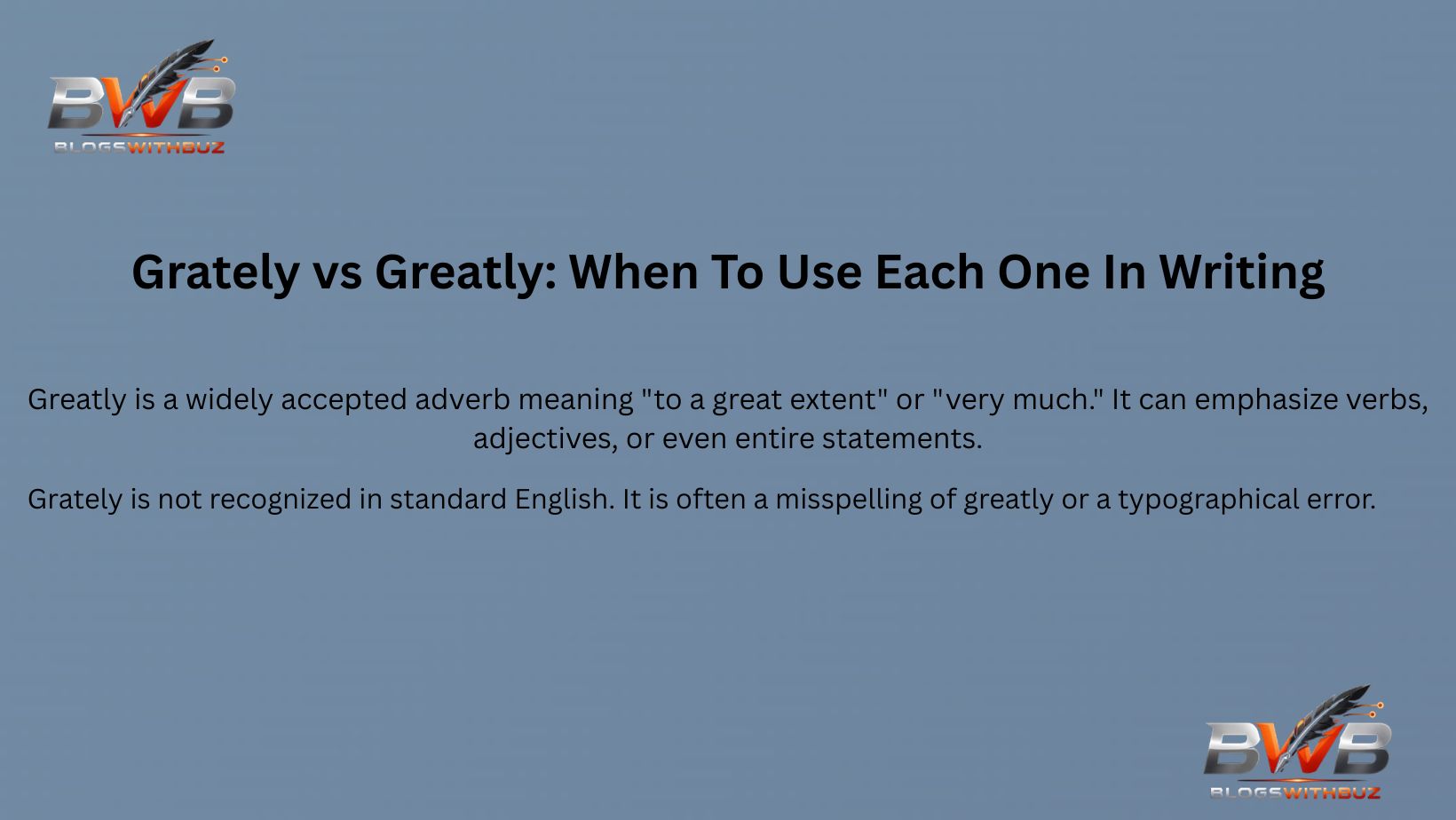
Grately is not recognized in standard English. It is often a misspelling of greatly or a typographical error. Some sources attempt to define it as an adverb meaning “in a great manner,” but this usage is rarely accepted. Writers who use grately may confuse readers, as it is largely considered incorrect or obsolete. Using the correct spelling demonstrates attention to detail and a strong command of language.
Define Greatly
Greatly is a widely accepted adverb meaning “to a great extent” or “very much.” It can emphasize verbs, adjectives, or even entire statements. For example, saying “I greatly appreciate your help” conveys a much stronger sentiment than just “I appreciate your help.” Greatly is versatile and can describe increases, decreases, importance, or intensity, such as “Profits greatly increased last quarter.” Using this adverb correctly ensures clarity and enhances your writing style.
How To Properly Use The Words In A Sentence
Understanding how to correctly implement Grately vs Greatly is key to avoiding errors in both formal and casual writing. Let’s explore proper sentence construction for each term.
How To Use “Grately” In A Sentence
Since grately is mostly incorrect, its use should be limited or avoided. Some writers may attempt to use it for stylistic or humorous effects, but it is generally not recommended. Examples of intended usage include:
- “The athlete’s performance was grately improved after months of training.”
- “The impact of the pandemic was felt grately by small businesses.”
These sentences demonstrate potential intent, but professional or formal writing should replace grately with greatly for accuracy.
How To Use “Greatly” In A Sentence
Greatly is the safe, standard choice for writing. It can show appreciation, improvement, or influence. Examples include:
- “I greatly appreciate your help with this project.”
- “The company’s profits have greatly increased since the new strategy.”
- “Their reputation was greatly affected by the scandal.”
Using greatly or grately effectively means choosing the word that your readers will recognize and understand clearly. Always opt for greatly in professional contexts.
More Examples Of Grately & Greatly Used In Sentences
Seeing both words in context helps solidify understanding. Below are multiple sentence examples showing each word’s intended or mistaken use.
Examples Of Using Grately In A Sentence
- “Her anxiety was grately reduced after meditation.”
- “The team’s morale was grately boosted by the coach.”
- “The product quality was grately enhanced by the new process.”
Remember, these examples show hypothetical or incorrect usage. Grately vs Greatly should be recognized as greatly for correctness.
Examples Of Using Greatly In A Sentence
- “The new law will greatly impact millions of people.”
- “Her contributions were greatly appreciated by colleagues.”
- “The team’s performance greatly improved after hiring a new coach.”
- “Their happiness greatly increased with the birth of their child.”
These illustrate proper adverb use to emphasize significance or intensity.
Common Mistakes To Avoid
Writers often confuse grately and greatly, resulting in awkward or incorrect sentences. Recognizing these pitfalls is crucial.
Mistakes To Avoid
- Using grately instead of greatly in professional writing.
- Treating grately vs greatly interchangeably without understanding meaning.
- Confusing intensity or magnitude in a sentence by selecting the wrong word.
These mistakes are common but easily corrected with careful proofreading and knowledge of context.
How To Avoid These Mistakes
- Always verify spelling in a dictionary.
- Understand the meaning of greatly or grately before using them.
- Proofread your writing or have a second reader check for errors.
- Replace incorrect grately usage with greatly in formal writing.
By applying these tips, your writing becomes more precise and professional.
Context Matters
Choosing between grately vs greatly depends on context. Understanding the nuances ensures you convey the correct meaning.
Examples Of Different Contexts
- Formal Writing: “Company profits increased greatly last year.”
- Casual Conversation: “That pizza was greatly delicious!”
- Comparative Statements: “She was greatly more successful than competitors.”
While casual uses may tolerate informal or slang words, formal contexts always favor greatly.
Exceptions To The Rules
Sometimes, usage may depend on specific situations. Let’s examine when exceptions occur.
When “Grately” Might Be Used
- To describe objects with many grates or bars (e.g., a grately fence).
- To describe a sound produced by rubbing against a grate (e.g., a grately noise).
Outside these niche cases, grately remains largely obsolete.
When “Greatly” Might Not Be Used
- When describing a slight or marginal effect, words like “somewhat” or “slightly” are better.
- To describe severe negative outcomes, alternatives like “significantly” or “considerably” may fit better.
Understanding these subtleties ensures accurate, meaningful writing.
Practice Exercises
Applying knowledge strengthens retention. Try these exercises to master grately vs greatly.
Exercise 1: Fill In The Blank
Choose the correct word:
- The company’s profits have increased ________.
- I appreciate your help ________.
- She was ________ disappointed by the news.
- The teacher’s enthusiasm ________ improved students’ interest.
- He ________ underestimated the task’s difficulty.
Answer Key: 1. greatly, 2. greatly, 3. greatly, 4. greatly, 5. gravely
Exercise 2: Identify The Correct Word
- The patient’s condition has ________ improved. → greatly
- The ________ injured soldier needed urgent care. → gravely
- The team’s performance has ________ declined. → greatly
- The comedian’s jokes were ________ appreciated. → greatly
- The ________ ill child received immediate attention. → gravely
Conclusion
Understanding Grately vs Greatly is crucial for clear and precise communication. While grately is mostly incorrect, greatly remains a powerful adverb to express intensity, appreciation, or significant change. Context, audience, and sentence structure determine the right choice. Careful proofreading, consistent practice, and attention to nuance can elevate your writing and avoid confusion. By mastering these subtleties, you improve readability and ensure your message resonates accurately with readers. Embrace correct usage to enhance your professional and creative writing skills.
FAQs
What is the difference between grately and greatly?
Grately is mostly incorrect; greatly is the correct adverb meaning “to a great extent” or “very much.”
Can grately ever be used correctly?
Yes, only in niche contexts like describing grates or grate-like sounds, otherwise it is considered a misspelling of greatly.
Why do people confuse grately and greatly?
The words sound similar. Typographical errors, lack of grammar knowledge, or casual writing contribute to confusion.
Is greatly acceptable in formal writing?
Absolutely. Greatly is widely accepted and preferred in professional, academic, and formal writing.
How can I avoid mistakes using greatly or grately?
Proofread, consult a dictionary, understand context, and replace grately with greatly in formal contexts.
Read more: Blogs With Buzz