Butch vs Masc: Do These Mean The Same? How To Use Them
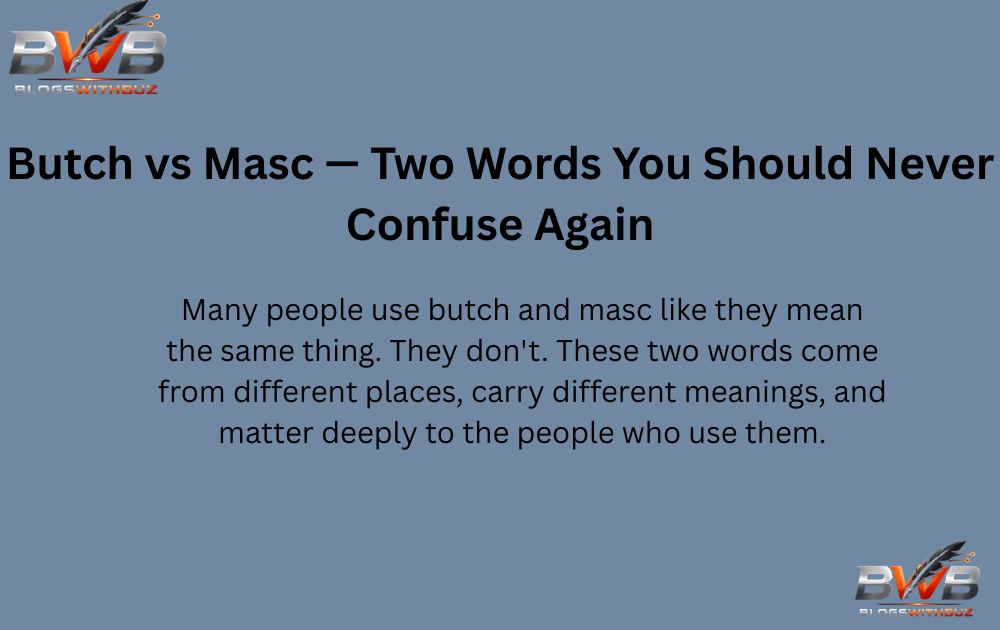
Many people use butch and masc like they mean the same thing. They don’t. These two words come from different places, carry different meanings, and matter deeply to the people who use them.
If you’ve ever felt unsure which word to use or why it even matters you’re in the right place. This guide breaks down butch vs masc in plain, simple language so you walk away knowing exactly how to use both words correctly and respectfully.
Wise vs Wize: When To Use Each One? What To Consider
Sponser or Sponsor: Which Spelling Is Actually Correct?
Which vs Wich vs Witch: Differences And How To Use Them Correctly
Steer or Stear? The Spelling Mistake You Must Stop Making
Difference Between Masc and Butch
Define Butch
Butch is a word used to describe a lesbian who presents herself in a masculine way. It covers how she dresses, how she carries herself, and how she connects with her identity and community. Think short hair, men’s clothing, and a strong, confident presence.
The word has been around since the early 20th century. Back then, it was often used as an insult against lesbian women who looked or acted masculine. Over time, the lesbian community took that word back and turned it into something powerful. Today, many people wear the butch identity as a badge of pride.
Butch is not just about appearance. It’s about a deep sense of self, a connection to LGBTQ+ culture, and belonging to a community with a real history behind it.
What is a Masc
Masc is short for masculine. It describes anyone who presents in a traditionally masculine way regardless of their gender identity or sexual orientation. Men, women, non-binary people, transgender individuals, anyone can be described as masc.
The word became popular over the last ten years or so. People needed a term that was more open and flexible than butch. Masc filled that gap. It’s used in phrases like masc-presenting or masc energy to describe how someone looks or feels without making assumptions about who they are.
So masc is wider and more flexible. Butch is specific and community-rooted. That’s the core difference.
How To Properly Use The Words In A Sentence Masc vs Mutch
Knowing the difference between butch vs masc is one thing. Using them correctly in real conversation is another. Here’s a simple guide to help you get it right every time.
How To Use Butch In A Sentence
Use butch when talking about someone who identifies with butch identity — usually within the lesbian or queer community. Don’t throw it around casually to describe any masculine-looking person.
Here are clear examples:
- “She identifies as a lesbian and presents as butch.”
- “Her butch style — short hair, boots, and flannel — feels completely natural to her.”
- “He’s a butch trans man who’s proud of his identity.”
- “Growing up, she always leaned butch, even before she had the words for it.”
- “Their butch confidence is something a lot of people admire.”
The key point here is that butch connects to identity, not just looks.
How To Use Masc In A Sentence
Masc works as a simple descriptor. Use it to talk about masculine presentation, masculine energy, or masculine traits — across any gender.
Here are some natural examples:
- “He’s always had very masc energy — calm, steady, and direct.”
- “She dresses in a masc style but doesn’t identify as butch.”
- “They’re drawn to more masc-presenting people.”
- “His whole vibe is very masc, from his clothes to the way he talks.”
- “Being masc doesn’t mean you have to follow every traditional masculine rule.”
Masc tells you about how someone presents. It doesn’t tell you who they are deep down.
More Examples Of Butch & Masc Used In Sentences
Seeing these words used in real sentences makes the difference easier to spot. Here are more examples of butch vs masc in everyday use.
Butch in sentences:
- “She’s always been a bit butch — short hair, practical clothes, no fuss.”
- “Butch women have pushed hard for visibility and acceptance in the LGBTQ+ community.”
- “Some people used butch as an insult, but many have reclaimed it with real pride.”
- “Butch and femme have a long, rich history in lesbian culture.”
- “She’s always been drawn to butch women — their masculine confidence and steady presence appeal to her.”
Masc in sentences:
- “He’s into traditionally masculine hobbies — hiking, woodworking, camping.”
- “There’s a lot of pressure on men to act masc, and that pressure can be heavy.”
- “He’s not chasing a masc image — he’s just being himself.”
- “Masc and femme dynamics show up in the gay community too, not just among lesbians.”
- “There’s no single right way to be masc, just like there’s no single right way to be butch.”
Common Mistakes To Avoid
People make honest mistakes with these words all the time. But once you know what to watch out for, it gets much easier to use butch vs masc the right way.
Using Butch And Masc Interchangeably
Butch and masc are not the same word. Butch carries deep roots in lesbian identity and LGBTQ+ history. Masc is a general term for masculine expression that applies to anyone. Mixing them up can feel dismissive to people who hold these labels close to their identity.
Assuming Butch And Masc Are Only For LGBTQ+ Individuals
Gender expression and sexual orientation are two separate things. Anyone — straight, gay, queer, or otherwise — can present in a masculine or feminine way. Masc especially reaches across the full gender expression spectrum, so don’t box it into one community.
Using Butch And Masc As Synonyms For Tomboy And Girly
Tomboy and girly are words typically used for young girls. Butch and masc describe adult gender expression and identity. They carry much more weight and meaning. Treating them as childish alternatives flattens their real significance.
Offering Tips To Avoid Common Mistakes
A few simple habits make a big difference here. Always listen to how someone describes themselves and follow their lead. Do a little research before using these terms in sensitive conversations. Never use butch or masc to judge or police someone’s behavior. And when in doubt, just ask politely — most people appreciate the respect behind the question.
Context Matters
The right word often depends on where you are and who you’re with. Butch vs masc isn’t always a clear-cut choice — context shapes which one fits best.
Professional Settings
At work or in a business environment, masc is usually the safer and more neutral option. It describes masculine presentation without pulling in community-specific history. Whether someone works in finance or fashion, masc communicates clearly without overstepping.
Social Settings
In casual hangouts or queer spaces, butch might come up naturally and comfortably. At more formal events, masc works better because it’s widely understood even by people outside the LGBTQ+ community. Reading the room matters here.
Personal Preferences
Some people feel a deep connection to butch. Others prefer masc because it feels more modern or open. Neither choice is wrong. The most important thing is to use the word that the person themselves uses — personal identity always takes priority over general rules.
Exceptions To The Rules
Language doesn’t follow strict rules all the time. With butch vs masc, there are real situations where the usual guidelines bend or shift.
Cultural Differences
In different parts of the world, these words carry different weight. In some cultures, butch might describe any masculine-presenting woman. In others, it points directly to lesbian identity. Masc can mean gender-nonconforming in one community and simply “regular guy energy” in another. Always consider the cultural setting you’re in.
Personal Preferences
Some non-binary individuals choose butch because it feels more fitting than masc for their experience. Others reject both words entirely. Personal preference always overrides general rules — and that’s completely fine. Language grows and shifts with the people who use it.
Contextual Factors
The relationship between the speaker and the person being described also plays a role. A partner might use butch warmly and privately, while choosing a more neutral word in public. Whether you’re at a family dinner, a work meeting, or a queer community gathering changes which word feels right.
Intersectionality
Intersectionality matters a lot here. A person’s race, ethnicity, and background shape how they relate to these terms and how others receive them. Being a butch woman of color, for example, comes with layers of experience that go far beyond just one word. Keeping intersectionality in mind makes your language more honest and more respectful.
Practice Exercises
These simple exercises help you practice using butch vs masc correctly in real sentences.
Exercise 1: Fill In The Blank
Pick butch or masc to complete each sentence:
- She’s not very __________, but she’s definitely not feminine either. (Answer: butch)
- He’s always been into __________ fashion, even as a kid. (Answer: masc)
- That attitude was so __________, it surprised everyone in the room. (Answer: butch)
- My friend’s girlfriend is really __________, but still very feminine. (Answer: masc)
- He’s not very __________, but he’s definitely not feminine either. (Answer: masc)
Exercise 2: Sentence Writing
Write one sentence for each word using the correct context:
| Word | Definition |
| Butch | A woman who presents in a masculine way, tied to lesbian identity |
| Masc | Anyone who shows traditionally masculine traits or presentation |
Sample Answers:
- “She’s always leaned more butch than femme — short hair, straight-talking, and completely comfortable with it.”
- “He’s into sports and outdoor work — everyone around him describes him as very masc.”
Conclusion
Butch belongs to lesbian identity with real historical roots. Masc is a broader word for masculine expression that fits anyone. These two words are not the same, and using them correctly shows genuine respect for people’s identities. Make sure the words you choose actually reflect who someone is because getting it right truly matters.
Key Takeaways
- Butch is tied to lesbian identity and LGBTQ+ community history
- Masc describes masculine presentation across all genders and orientations
- Never swap these words — they carry different meanings
- Always use the term someone chooses for themselves
- Respectful, inclusive language reflects real care for others
FAQs
What Is The Main Difference Between Butch And Masc?
Butch refers specifically to lesbian identity with masculine presentation, while masc broadly describes masculine expression for anyone regardless of their gender identity or sexual orientation.
Can Straight Women Be Called Butch Or Masc?
Yes, anyone can present in a masculine way. Masc fits more naturally for straight women, while butch stays more closely tied to lesbian or queer identity specifically.
Is Masc A Newer Term Than Butch?
Yes. Butch dates back to the early 20th century, while masc grew popular recently as a more inclusive option across the full gender expression spectrum.
Can Someone Identify As Both Butch And Masc?
Absolutely. These labels are not mutually exclusive. Some people feel both words reflect their gender expression and personal identity, and that is completely valid.
Why Does Using The Right Term Between Butch And Masc Actually Matter?
Using the correct term shows real respect for someone’s identity and personal preferences. Wrong usage feels dismissive and hurtful, so getting it right genuinely matters.