The correct spelling depends on what you mean. “Title” is the word you should use most of the time. It refers to a name, heading, or designation, like a book’s title, a sports championship title, or an academic title such as Dr. or Professor. You can also use title as a verb, meaning to give something a name or designation. On the other hand, “tittle” is rarely used and means a tiny dot, mark, or an insignificant amount. For example, the small dot over the letter “i” is called a tittle.
Many people confuse title vs tittle, thinking they are interchangeable, but their meanings are very different. Understanding their definitions, correct spelling, and usage in sentences helps avoid grammar mistakes. Always use title when referring to names, headings, or legal ownership, and reserve tittle for very small marks or quantities.
Read more spellings:
- Waring vs Wearing: The Main Differences And When To Use Them
- Plushie or Plushy: When to Opt for One Term Over Another
- Comming Vs Coming: What’s The Correct Spelling To Use?
- Useful vs Usefull: Deciding Between Similar Terms
Definitions Of Title And Tittle
Definitions Of Title
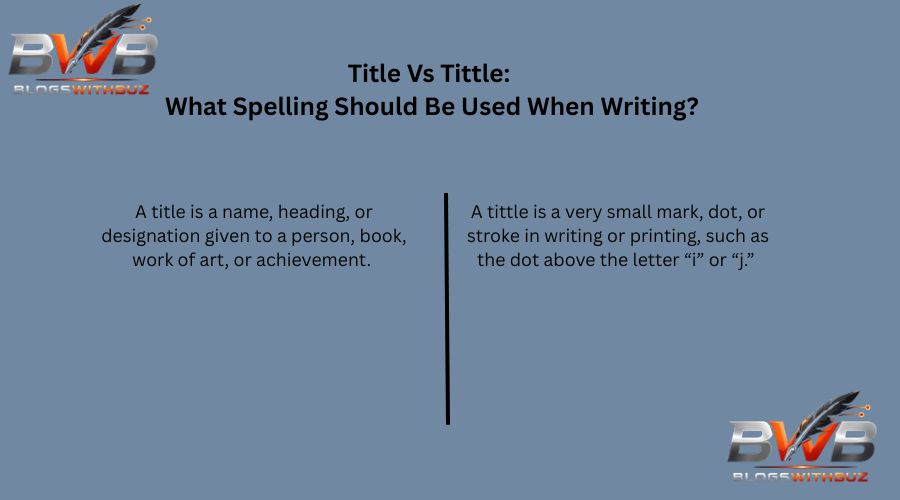
A title is a name, heading, or designation given to a person, book, work of art, or achievement. For example, a book’s title, a sports championship title, or an academic title like Dr. or Professor. You can also use title as a verb, meaning to give something a name or recognition. Tittle, on the other hand, is a tiny mark or dot in writing, such as the dot over the letter “i,” or a very small and insignificant amount.
Definitions Of Tittle
A tittle is a very small mark, dot, or stroke in writing or printing, such as the dot above the letter “i” or “j.” It can also mean a tiny, insignificant amount of something. Tittle is always a noun and is rarely used in everyday conversation. Unlike title, which refers to names, headings, or designations, tittle focuses on something very small or minor, often overlooked but technically important in writing and printing.
How To Properly Use Title And Tittle In A Sentence
The words title and tittle are both correct, but their meanings are very different. You cannot use them interchangeably. Title refers to a name, heading, or designation, while tittle is a tiny mark or an insignificant amount. Knowing how to use them in sentences helps avoid spelling and grammar mistakes.
How To Use The Word Title
Use title as a noun or a verb. As a noun, it can describe:
- A book, article, or chapter heading, like “The book’s title was interesting.”
- A person’s designation or rank, like “Dr. Khan’s title is well-respected.”
- A legal right to ownership, like “He has the title to the property.”
- A sports championship, like “She won the tennis league title.”
As a verb, title means to give a name or designation:
- “The author will title the new book next week.”
The plural of title is titles.
How To Use The Word Tittle
Tittle is always a noun. Use it to refer to:
- A very small mark or dot in writing, such as the dot over the letter “i.”
- A tiny or insignificant amount of something, like “His opinion did not matter a tittle.
The plural of tittle is tittles.
Example Sentences for Title
- Travis took home the tennis league title last week.
- The book’s title gave a clear idea about its story.
- Dr. Ahmed’s academic title shows his expertise.
- She proudly displayed her championship title on the shelf.
- George changed his title to Professor after earning his degree.
- The lawyer had the legal title to the property.
- The newspaper printed the article under an attention-grabbing title.
- The author will title her new novel next month.
- The parish will title the graduates during the ceremony.
- Winning the league title was a dream come true for the team.
Example Sentences for Tittle
- The dot above the letter “i” is called a tittle.
- Mark’s words did not matter a tittle in the argument.
- She noticed a tiny tittle of dust on the shelf.
- The professor explained how a tittle can change the meaning in old manuscripts.
- Felicia waited for a tittle of information before making her decision.
- Even the smallest tittle of evidence was important in the experiment.
- The editor carefully checked every tittle in the manuscript.
- The students did not give a tittle of credit to the idea.
- A tittle above a letter can indicate a completely different word in some languages.
- Mr. Leonard had a tittle secret that no one knew about.
Title Vs Tittle: What Not To Do When Writing These Words
When writing, the most important rule is not to confuse title and tittle. Using the wrong word can completely change the meaning of a sentence.
Common mistakes to avoid:
- Mixing spellings: Never write tittle when you mean title. For example, “Jane won the league tittle last year” is incorrect. It should be “Jane won the league title last year.”
- Using them interchangeably: Title is for names, headings, designations, awards, or legal rights. Tittle is only for tiny marks or insignificant amounts.
- Ignoring parts of speech: Title can be a noun or verb. Tittle is always a noun and does not have past or present tense forms.
- Overlooking context: Always check the sentence to decide whether you need title or tittle. Context matters in writing and grammar.
By following these tips, you can avoid common grammar mistakes and use title vs tittle correctly.
Practice Exercises: Title vs Tittle
Exercise 1: Fill In The Blank
Complete the sentences with the correct word: title or tittle.
- The book’s __________ was very creative and interesting.
- The lawyer has the legal __________ to the property.
- The dot above the letter “i” is called a __________.
- She did not care a __________ about what others thought.
- The author will __________ her new novel next month.
- Winning the championship __________ was a dream come true.
- Even a small __________ of evidence can be important in research.
- Dr. Khan’s academic __________ shows his expertise.
Exercise 2: Identify The Correct Term
Read the sentences and choose whether title or tittle is correct.
- Jane received a _________ for best teacher of the year.
- There is a tiny _________ missing on this printed manuscript.
- The newspaper published the article under an exciting _________.
- His opinion did not matter a _________ in the discussion.
- The parish will _________ the graduates during the ceremony.
Conclusion
In summary, title and tittle are both correct words, but their meanings are very different. Title is used for names, headings, designations, awards, or legal ownership, and it can function as a noun or a verb. Tittle, on the other hand, refers to a tiny mark or an insignificant amount and is always a noun. Using the wrong word can change the meaning of a sentence, so it’s important to understand their definitions and proper usage in writing.
Key Takeaways
- Title refers to a name, heading, designation, or award.
- Title can be a noun or verb; plural form is titles.
- Tittle means a tiny mark, dot, or insignificant amount.
- Tittle is always a noun; plural form is tittles.
- Never confuse title vs tittle—context determines the correct word.
- Correct spelling ensures your writing is clear and professional.
- Use title for books, academic ranks, legal rights, or championships.
- Use tittle only for very small marks or tiny quantities.