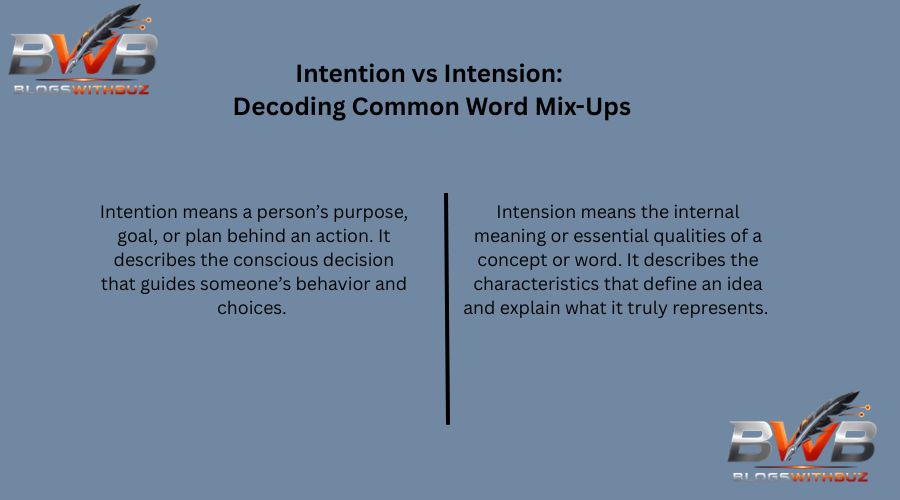
The main difference between intention and intension is simple. Intention means a person’s purpose, goal, or plan behind an action, while intension refers to the deeper meaning or essential qualities of a concept or word. These two terms sound almost the same, but they belong to different areas of language and thought.
In everyday communication, people usually use intention to talk about goals, plans, or conscious decisions. For example, someone may have the intention to start a business or improve their health. The word connects to human behavior, motivation, and decision-making.
Intension, however, appears more often in philosophy, linguistics, and semantics. It explains the internal meaning or definition of a concept. Linguists use intension to study the meaning of words and the characteristics that define an idea.
Understanding the difference between intention and intension helps improve grammar, vocabulary, and clear communication in writing and language use.
Cheer Vs Chear: When To Use Each One? What To Consider
Currier vs Courier: When To Use Each One In Writing?
Pentoxide vs Pentaoxide: Differences And Uses For Each One
Distress vs Duress: Usage Guidelines and Popular Confusions
Manuel Vs. Manual: When To Use Each One In Writing?
Define Intention
Intention means a person’s purpose, goal, or plan behind an action. It describes the conscious decision that guides someone’s behavior and choices. When people set an intention, they focus their thoughts and actions on achieving a specific outcome. In everyday communication, intention often relates to motivation, decision-making, and personal goals. For example, someone may have the intention to learn a new skill or improve their health. A clear intention helps people stay focused, organize their efforts, and act with purpose in both personal and professional situations.
Define Intension
Intension means the internal meaning or essential qualities of a concept or word. It describes the characteristics that define an idea and explain what it truly represents. In fields like linguistics, philosophy, and semantics, intension helps people understand the deeper meaning behind language and concepts. Instead of focusing on actions or goals, intension focuses on definitions, attributes, and conceptual meaning. For example, the intension of the word “bird” includes qualities like having feathers, wings, and the ability to lay eggs. Understanding intension helps improve language analysis, vocabulary learning, and precise communication.
How To Properly Use The Words In A Sentence
Understanding the difference between intention and intension helps you use these words correctly in writing and communication. Both terms sound similar, but they describe different ideas. Intention relates to a person’s purpose, goal, or plan, while intension refers to the meaning or defining qualities of a concept in language, philosophy, or semantics. Choosing the right word depends on the context and the idea you want to express.
How To Use Intention In A Sentence
Intention describes a person’s purpose or goal behind an action. People often use this word when talking about plans, motivation, or decision-making. It focuses on human behavior and the conscious aim of doing something.
Examples:
- She joined the meeting with the intention of sharing her new ideas.
- His intention was to improve his communication skills.
- The team worked hard with the intention of finishing the project early.
- My intention is to learn better grammar and vocabulary.
How To Use Intension In A Sentence
Intension refers to the meaning or essential qualities of a word or concept. This term appears mostly in linguistics, philosophy, and semantics when discussing definitions and conceptual meaning.
Examples:
- The intension of the word “teacher” includes guiding and educating students.
- Linguists study the intension of words to understand their meaning.
- The intension of the concept focuses on its defining characteristics.
More Examples Of Intention & Intension Used In Sentences
Learning from examples is one of the best ways to understand the difference between intention and intension. While intention relates to a person’s purpose or goal, intension focuses on the meaning and defining qualities of a concept or word. The following examples show how each word works in real sentences and contexts.
Examples Of Using Intention In A Sentence
- Her intention was to complete the project before the deadline.
- He spoke with the intention of solving the problem peacefully.
- My intention is to improve my English writing skills this year.
- The manager explained his intention to expand the business.
- She started the course with the intention of learning digital marketing.
- Their intention was to help the community through volunteer work.
Examples Of Using Intension In A Sentence
- The intension of the word “leader” includes guiding and supporting others.
- Linguists study the intension of words to understand their deeper meaning.
- The intension of the concept focuses on its defining characteristics.
- In philosophy, scholars analyze the intension of ideas and terms.
- The dictionary explains the intension of many complex words.
Common Mistakes To Avoid intention or intension
Many writers confuse intention and intension because the words look and sound similar. However, they have different meanings and belong to different contexts in language and communication. Understanding these differences helps improve grammar, vocabulary, and clear writing.
Mistake 1: Using “Intention” Instead Of “Intension”
A common mistake happens when people use intention when they actually mean intension. Remember, intension refers to the meaning or defining qualities of a concept or word, especially in linguistics, philosophy, and semantics.
Example mistake:
- Incorrect: The intention of the word “freedom” explains its meaning.
- Correct: The intension of the word “freedom” explains its meaning.
Mistake 2: Using “Intension” Instead Of “Intention”
Another mistake occurs when writers use intension while talking about a purpose, goal, or plan. In these situations, the correct word is intention, which relates to human motivation and decision-making.
Example mistake:
- Incorrect: Her intension was to help the team succeed.
- Correct: Her intention was to help the team succeed.
Mistake 3: Failing To Recognize The Contextual Differences
People often forget that context matters when choosing between intention and intension. Intention usually appears in everyday communication about plans, goals, and actions, while intension appears in academic fields like philosophy, linguistics, and logic where the focus is on meaning and conceptual definition.
Mistake 4: Neglecting The Precise Usage In Specific Fields
Another mistake is ignoring how these words are used in specialized fields. In psychology and communication, intention explains human behavior, motivation, and purpose. In contrast, intension is used in semantic analysis, philosophy, and language studies to explain the essential characteristics and meaning of concepts. Using the correct term ensures accurate and professional writing.
Context Matters
The choice between intention and intension often depends on the context in which the words appear. Both terms relate to meaning and understanding, but they serve different roles in different fields. Knowing the context helps writers use the correct word and communicate ideas clearly.
1. Philosophy
In philosophy, both terms appear but with different meanings. Intention usually refers to a person’s purpose or mental state behind an action. Philosophers often discuss intention when analyzing human choices, ethics, and decision-making.
Intension, however, relates to the essential meaning or defining qualities of a concept. Philosophers use it to study the nature of ideas and how concepts are defined.
2. Psychology
In psychology, the word intention is more common. It describes a person’s conscious goal, plan, or motivation that guides behavior. Researchers study intention to understand why people make certain decisions or take specific actions. This concept helps explain human behavior and personal goal-setting.
3. Linguistics
In linguistics, intension plays an important role. Linguists use this term to describe the meaning and defining characteristics of words or concepts. Studying intension helps experts analyze language, semantics, and how people understand word meanings in communication.
Exceptions To The Rules intension vs intention
Although intention and intension usually follow clear grammar rules, some situations create exceptions. In certain fields or contexts, these words may appear in specialized ways. Understanding these exceptions helps improve language use, vocabulary, and clear communication.
1. Technical Terminology
In technical areas such as philosophy, linguistics, and computer science, the meanings of these words become more precise. Intention often refers to a person’s mental purpose or goal behind an action. Intension, however, describes the semantic meaning or defining properties of a concept used in logical and linguistic analysis.
2. Legal Context
In legal writing, intention usually refers to a person’s state of mind or purpose when performing an action. Courts often analyze intention to understand responsibility. In some cases, intension may describe the specific interpretation or meaning of legal terms within contracts or laws.
3. Literary And Artistic Expression
In literature and art, authors and artists may use these ideas differently. An author’s intention explains the purpose or message behind a work, while the intension of certain words, symbols, or themes can reveal deeper meaning and interpretation.
4. Cultural And Linguistic Variations
Different languages and cultures may interpret intention and intension in unique ways. Some languages focus more on purpose and motivation, while others emphasize the meaning and conceptual qualities of words.
5. Contextual Nuances
Language constantly evolves, and meaning often depends on context. In everyday communication, people usually use intention when talking about goals or plans. However, in academic discussions about semantics, definitions, and conceptual meaning, intension becomes the more accurate term.
Conclusion
Understanding the difference between intention and intension is essential for clear communication and precise writing. Intention refers to a person’s purpose, goal, or plan behind actions, focusing on motivation and decision-making. Intension, on the other hand, describes the internal meaning, defining qualities, or essence of a concept or word, often used in philosophy, linguistics, and semantics. By recognizing the context, avoiding common mistakes, and using these words correctly in sentences, you can improve your grammar, vocabulary, and overall clarity in both personal and professional writing.
FAQs
What is the main difference between intention and intension?
Intention is a person’s goal or purpose behind an action, while intension is the meaning or essential qualities of a concept or word.
Can intention and intension be used interchangeably?
No. Using them interchangeably is a common mistake because they have distinct meanings and contexts.
Where is intension mostly used?
Intension is mainly used in philosophy, linguistics, semantics, and logic to describe conceptual meaning.
Where is intention mostly used?
Intention is used in everyday life, psychology, communication, and goal-setting to describe purpose or plans.
How can I avoid confusing these words?
Focus on the context: use intention for goals and actions, and intension for meaning, definitions, or qualities of concepts.