
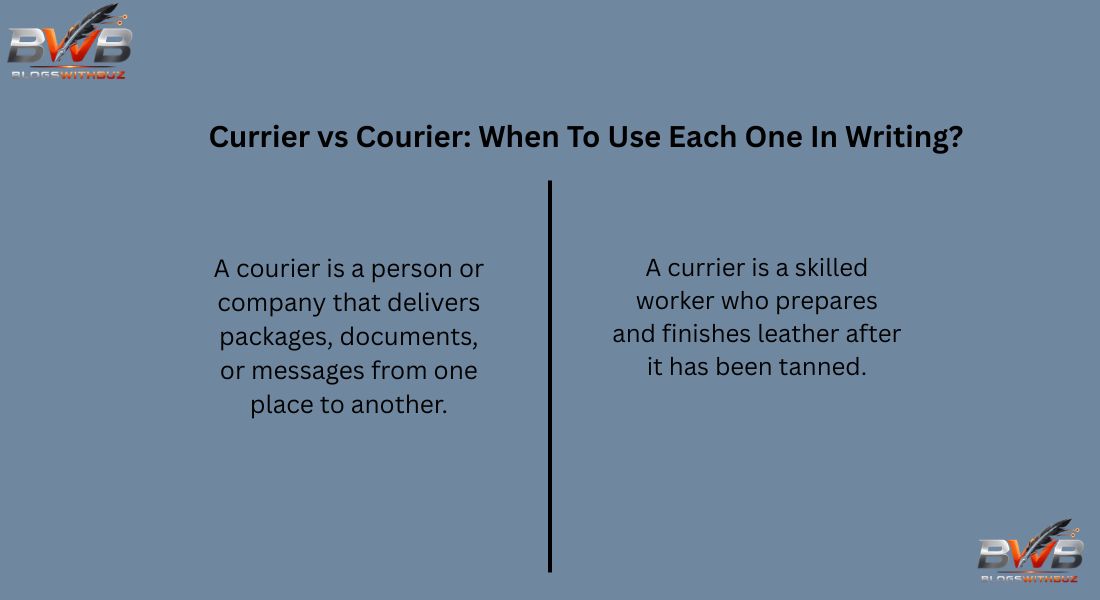
A currier is a person who works with leather, while a courier is someone who delivers packages, documents, or messages. Although these words sound alike, their meanings are very different, and using the wrong one can cause confusion.
A currier is skilled in the leather industry, handling tasks like tanning, currying, and preparing leather for products such as shoes, belts, and bags. On the other hand, a courier works in delivery services, transporting items using cars, bicycles, trucks, or on foot. Understanding the difference between currier and courier is essential for clear written communication and avoiding mistakes.
In grammar and vocabulary, context matters: if you are talking about leather, use currier; if you mean delivery, use courier. Learning the correct word usage helps improve your writing and ensures your message is understood in everyday language and professional settings.
Define Currier
A currier is a skilled worker who prepares and finishes leather after it has been tanned. In the leather industry, curriers use techniques like currying, stretching, shaving, and applying oils to make leather soft, durable, and ready for products such as shoes, belts, and bags.
They work in tanneries or leather manufacturing plants, handling tools and methods that improve the texture and quality of leather. Understanding the role of a currier is important for anyone learning English vocabulary or writing about leather processing. Using “currier” correctly ensures clear written communication and avoids confusion with similar-sounding words like “courier.”
Placque Vs Plaque, Meaning, And Correct Way To Use Each One
Define Courier
A courier is a person or company that delivers packages, documents, or messages from one place to another. In delivery services and logistics, couriers use cars, trucks, bicycles, or even walk to transport items quickly and safely. There are different types of couriers, including same-day, overnight, and international courier services, depending on how fast the delivery is needed.
Understanding the role of a courier is important for clear written communication and proper vocabulary usage. Using “courier” correctly helps avoid confusion with similar-sounding words like currier, which relates to leather processing rather than delivery.
How To Properly Use The Words In A Sentence Currier vs Courier
Using the words currier and courier correctly depends on context. Currier refers to someone who works with leather, while courier is a person or company that delivers packages, documents, or messages. Choosing the right word ensures clear written communication and avoids confusion in everyday or professional writing.
How To Use Currier In A Sentence
A currier is someone who works with leather, so you use it when talking about leather preparation, tanning, or currying. Using it correctly ensures clear written communication and avoids confusion with the similar-sounding word courier. Here are some examples:
- The currier carefully prepared the leather for the shoemaker.
- My grandfather was a skilled currier who worked in a tannery.
- The company hired a new currier to improve the quality of their leather goods.
- She worked as a currier, handling currying and finishing leather for belts and bags.
In each sentence, “currier” clearly refers to someone skilled in the leather industry, not delivery or messaging.
How To Use Courier In A Sentence
A courier is someone who delivers packages, documents, or messages, so use it when talking about delivery services, shipping, or logistics. Using it correctly avoids confusion with the similar-sounding word currier, which relates to leather preparation. Here are some examples:
- The courier delivered the package to my doorstep this morning.
- We hired a courier to transport the important documents to the client.
- The courier company offers same-day and overnight delivery services.
- He sent the legal papers by courier to ensure they arrived on time.
In every sentence, “courier” clearly refers to a delivery professional or service, making your writing precise and easy to understand.
Powerfull vs Powerful: Which Spelling Is Correct?
More Examples Of Currier & Courier Used In Sentences
To fully understand the difference between currier and courier, it helps to see them in context. Here are multiple examples showing how currier relates to leather work and courier to delivery services, making usage clear.
Examples of Using Currier in a Sentence
- The currier worked all day preparing leather for the new shoes.
- My grandfather was a skilled currier in the leather industry.
- The company hired a currier to improve the quality of their belts and bags.
- A currier applies oils to leather to make it soft and durable.
- The currier carefully split the hides into thinner layers.
- She trained as a currier in a busy tannery.
- The leather workshop employed a currier to finish high-quality leather goods.
- Currying leather is an essential task for every skilled currier.
- The currier stretched the leather to improve its texture.
- Historical books mention how a currier prepared hides for various products.
- A professional currier can turn rough leather into smooth, flexible material.
- The apprentice watched the currier as he worked on the leather carefully.
Examples of Using Courier in a Sentence
- The courier delivered the package before noon.
- We hired a courier to send the legal documents safely.
- A courier company offers same-day delivery for urgent shipments.
- The courier rode his bicycle through busy streets to make deliveries.
- She works as a courier for a local delivery service.
- The courier signed for the package on behalf of the recipient.
- International couriers handle packages traveling across countries.
- Medical supplies were delivered by a trusted courier.
- The courier service ensures timely delivery of important documents.
- He sent the invitation by courier to guarantee it arrived safely.
- Businesses rely on couriers for fast and secure package delivery.
- The courier company uses trucks, cars, and bicycles for transportation.
Common Mistakes To Avoid When using Currier and Courier
Using currier and courier incorrectly is a common problem because they sound alike. Knowing the differences ensures clear written communication and prevents confusion in both everyday and professional writing.
Using “Currier” Instead Of “Courier”
A currier works with leather, so using it to mean someone who delivers packages or documents is wrong. For example, saying “The currier delivered my package” is incorrect. Always use courier when talking about delivery services.
Using “Courier” Instead Of “Currier”
A courier delivers items, so using it for leather preparation is incorrect. For example, “The courier prepared the leather for belts” is wrong. Use currier when referring to tanning, currying, or finishing leather.
Not Knowing The Difference
Many mistakes happen when people don’t understand the distinct meanings. Confusing the two can lead to unclear writing, especially in professional emails, documents, or educational content.
Tips To Avoid Mistakes
- Always double-check which word fits the context.
- Remember: Currier = leather work, Courier = delivery.
- Use a dictionary if unsure about meanings.
- Read examples in sentences to see correct usage.
Context Matters
Choosing between currier and courier depends on the context. Using the correct word ensures your written communication is clear and avoids confusion. Always consider what you are describing, leather processing or delivery services, before selecting the word.
Examples Of Different Contexts
- Leatherworking: The currier stretched and oiled the leather to make it soft and durable.
- Shipping & Logistics: We hired a courier to deliver the important documents across the city.
- Historical Context: In the 19th century, a currier prepared leather for shoes and belts.
- E-commerce Delivery: The courier company ensures same-day delivery for online orders.
- Professional Writing: Use currier when writing about the leather industry, and courier when writing about packages or messages.
Understanding context helps you use each word accurately and makes your writing precise and professional.
Exceptions To The Rules
While using currier and courier is usually straightforward, there are a few exceptions where context or tradition affects usage.
1. Historical Usage
In historical texts or older literature, currier may appear more often. For example, in the 19th century, a currier prepared leather for shoes, belts, and saddles. Using “currier” in this context is correct, even though it might seem unusual today.
2. Regional Differences
The use of currier and courier can vary by region. In some countries, courier is more commonly used for deliveries, while currier might be recognized mainly in historical or specialized leather contexts. Being aware of these differences ensures accurate written communication.
3. Industry-specific Usage
Certain industries may use one term differently. For example, in printing, a currier can refer to a machine that smooths paper, while a courier still refers to delivery services. Understanding industry-specific usage helps prevent confusion in professional writing.
Practice Exercises
These exercises help you practice the correct use of currier and courier in sentences. Try to choose the right word based on context, meaning, and grammar.
Exercise 1: Fill In The Blank
Choose the correct word (currier or courier) to complete each sentence:
- The __________ delivered the package to the wrong address.
- I need to find a __________ to transport this valuable artwork.
- My uncle used to work as a __________, delivering important documents.
- The leather __________ did an excellent job on my new briefcase.
Answer Key:
- courier
- currier
- courier
- currier
Exercise 2: Sentence Completion
Complete the sentences using the correct word (currier or courier):
- The __________ picked up the package from the post office.
- I had to use a __________ to send the legal documents to the client.
- The leather __________ is responsible for preparing hides for shoes and bags.
- The __________ company specializes in delivering medical supplies quickly.
Answer Key:
- courier
- courier
- currier
- courier
Conclusion
In summary, currier and courier are two words that sound similar but have very different meanings. A currier works in the leather industry, preparing, currying, and finishing leather for products like shoes, belts, and bags. A courier delivers packages, documents, or messages using cars, trucks, bicycles, or on foot. Using the wrong word can cause confusion in written communication, emails, or professional writing. Always consider context, check spelling, and understand industry or historical usage. By using these words correctly, you can write clearly, communicate effectively, and avoid common mistakes in everyday or professional language.
Key Takeaways
- Currier and courier sound similar but have different meanings.
- A currier works with leather, while a courier delivers packages, documents, or messages.
- Using the wrong word can lead to confusion in written communication.
- Context is important: use currier for leather-related topics and courier for delivery-related topics.
- Be aware of historical, regional, and industry-specific usage.
- Always double-check spelling and meaning to avoid mistakes.
- Learning correct usage improves vocabulary, grammar, and clarity in everyday and professional writing.
Frequently Asked Questions
What is the main difference between currier and courier?
A currier works with leather, preparing and finishing it for products like shoes or belts. A courier delivers packages, documents, or messages. The main difference is leather work versus delivery services.
Can currier and courier be used interchangeably?
No. These words have completely different meanings. Using them incorrectly can cause confusion in writing and professional communication. Always use the word that matches the context.
How can I remember which word to use?
Think of currier = leather work and courier = delivery. Checking the context, reading examples, and using a dictionary can help avoid mistakes.
Read more: