The correct word most people use is “seal”, not “seel.” A seal can mean a marine mammal that lives in the ocean or a device used to close something securely, like an envelope or a package. On the other hand, “seel” is an archaic word that means to sew shut the eyes of a bird of prey, such as a falcon, for training in falconry. Many people confuse these two words because they sound similar, but their meanings and usage are very different.
You can use seal in sentences like, “The diver saw a seal swimming in the ocean,” or “She sealed the envelope with tape.” Seel appears in historical or specialized contexts, for example, “The falconer seels the hawk’s eyes to calm it.” Understanding the difference between seal and seel helps avoid common grammar mistakes and ensures clear communication.
Signer Vs Signor: What’s The Correct Spelling To Use?
Trama vs Trauma: Common Misconceptions and Accurate Usage
Present vs Presant: Do These Mean The Same? How To Use Them
Define Seal
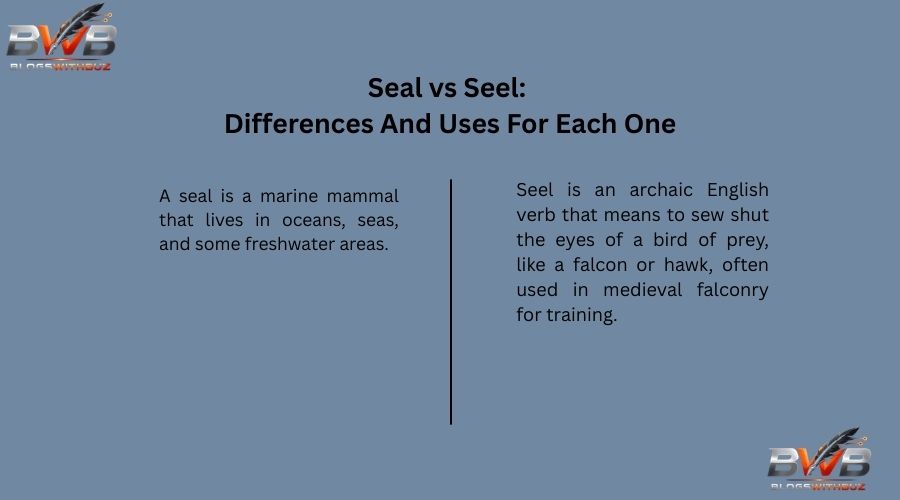
A seal is a marine mammal that lives in oceans, seas, and some freshwater areas. It has a streamlined body and flippers that help it swim efficiently and catch fish, squid, or crustaceans.
In English, seal can also mean a device or substance used to close or secure something, like an envelope, bottle, or legal document. Using seal correctly in sentences ensures clarity in writing, and understanding its different meanings helps avoid confusion with similar words like seel.
Seel Meaning
Seel is an archaic English verb that means to sew shut the eyes of a bird of prey, like a falcon or hawk, often used in medieval falconry for training. This word is rarely used in modern English and should not be confused with seal, which has different meanings.
Understanding seel in sentences and its historical context helps readers use English words accurately and avoid common grammar mistakes with similar-sounding words.
How To Properly Use The Words In A Sentence seel or seal
Using seal and seel correctly in sentences is important for clear communication. These two words sound similar but have very different meanings, so mixing them up can confuse readers. By understanding their definitions and contexts, you can write accurately and avoid common grammar mistakes.
How To Use ‘Seal’ In A Sentence
The word seal can be a noun or a verb. As a noun, it refers to a marine mammal or a device used to close or secure something, like an envelope, bottle, or legal document. As a verb, it means to close tightly or fasten securely.
Examples:
- The seal basked in the sun on the rock.
- She sealed the envelope with tape.
- The diver saw a seal swimming near the shore.
- The company sealed the contract with a handshake.
Using seal in sentences ensures your meaning is clear and precise.
How To Use ‘Seel’ In A Sentence
The word seel is an archaic verb used in falconry to sew shut the eyes of a bird of prey. It is rarely used in modern English, so you should use it only in historical or specialized contexts.
Examples:
- The falconer seels the hawk’s eyes to calm it before training.
- Medieval falconers seled their birds to prevent them from flying away.
- The surgeon metaphorically seels the wound to protect it from infection.
Understanding seel in sentences helps avoid confusing it with seal while respecting its historical meaning.
More Examples Of Seal & Seel Used In Sentences
Seeing seal and seel in sentences helps you understand their meanings and proper usage. These examples make it easier to avoid grammar mistakes and use the words correctly in writing and speaking.
Examples Of Using “Seal” In A Sentence
- The hunter shot a seal near the ocean shore.
- She sealed the envelope before mailing it.
- The diver watched a seal swim gracefully underwater.
- The company sealed the contract after final approval.
- The wine bottle had a broken seal, so it was replaced.
- The president put his seal of approval on the new policy.
- The archaeologist discovered an ancient seal from historical times.
- The lawyer advised him to seal the agreement immediately.
Examples Of Using “Seel” In A Sentence
- The falconer carefully seels the hawk’s eyes before training it.
- Medieval knights would seel their birds during falconry practices.
- The surgeon metaphorically seels the wound to protect it.
- The trainer seels the horse’s eyes to help it remain calm.
- The magician seels the volunteer’s eyes before performing a trick.
- The researcher seels the microscope to block excess light.
- The falconer seels the bird to prepare it for hunting.
- The artist seels the canvas before painting to create texture.
Common Mistakes To Avoid
Many people confuse seal and seel, which can change the meaning of a sentence. Here are the most common mistakes:
- Using “Seal” Instead Of “Seel”
Some writers use seal when they mean seel, especially in historical or falconry contexts. For example, saying “I need to seal the hawk’s eyes” is incorrect; it should be seel. - Using “Seel” Instead Of “Seal”
Others mistakenly use seel for modern meanings of seal, like closing an envelope. Example: “Please seel the package” is wrong; it should be seal. - Confusing “Seal” And “Ceiling”
Seal (to close or a marine mammal) is sometimes confused with ceiling (the top surface of a room). Context matters to avoid this error. - Not Understanding The Context
Using seal or seel without understanding the situation can confuse readers. For instance, seal can refer to a document, device, or animal, while seel is an archaic verb in falconry.
Tips To Avoid Making These Mistakes:
- Double-check the word meaning before using it.
- Use a dictionary to confirm correct spelling and usage.
- Pay attention to historical vs modern context.
- Re-read your writing to ensure you’re using seal or seel accurately.
Context Matters
Understanding the context is key to using seal and seel correctly. Although these words sound similar, their meanings and usage are very different. Choosing the right word depends on the situation.
Seal
Seal can be a noun or verb. As a noun, it refers to a marine mammal or a device used to close something securely, like an envelope, bottle, or legal document. As a verb, it means to fasten, close, or protect.
Examples in context:
- The diver saw a seal swimming near the coral reef.
- She sealed the envelope to keep the documents safe.
- The company sealed the package before shipping.
Using seal correctly depends on whether you mean an animal, object, or action.
Seel
Seel is an archaic verb used mainly in falconry to sew shut the eyes of a bird of prey to keep it calm or for training. It is not commonly used in modern English.
Examples in context:
- The falconer carefully seels the hawk’s eyes before training.
- Medieval falconers seled their birds to prevent them from flying away.
Choosing seel makes sense only in historical or specialized falconry contexts, while using it outside these situations can confuse readers.
Exceptions To The Rules
While the rules for using seal and seel are generally straightforward, there are some exceptions where their usage may differ.
1. Legal Terminology
In legal contexts, seal has a special meaning. It often indicates that a document or contract is official and legally binding. For example:
- “The agreement was signed and sealed by both parties.”
Here, seal doesn’t mean closing an envelope or referring to a marine animal; it shows authenticity and authority.
2. Regional Variations
Some regions may use seel as a variant of seal in specific dialects. For instance, in certain Scots dialects, seel can mean a stamp or emblem. However, this usage is rare in standard English, and modern readers might not understand it.
3. Idiomatic Expressions
Both seal and seel appear in figurative language.
- “To seal one’s fate” means to make a decision that cannot be changed.
- “To seel one’s lips” means to keep quiet.
In these expressions, the words are used metaphorically, not literally.
Understanding these exceptions helps you use seal and seel accurately, whether in modern writing, historical contexts, or idiomatic phrases.
Practice Exercises
Practicing with seal and seel helps you understand their differences and use them correctly in writing. Try these exercises to improve your English grammar and vocabulary skills.
Exercise 1: Choose the correct word
Fill in the blanks with seal or seel:
- The envelope was _______ tightly before mailing.
- The falconer carefully _______ the hawk’s eyes during training.
- A _______ was resting on the rocks near the shore.
- The lawyer advised to _______ the deal immediately.
- Medieval falconers _______ the bird’s eyes to prevent escape.
Answer Key: 1. sealed, 2. seels, 3. seal, 4. seal, 5. seled
Exercise 2: Complete the sentence
Choose the correct word to complete each sentence:
- The diver spotted a _______ swimming gracefully underwater.
- The notary stamped the document with a _______.
- To calm the hawk, the falconer had to _______ its eyes.
- She _______ the package before sending it to ensure safety.
- The medieval trainer _______ the young bird’s eyes for practice.
Answer Key: 1. seal, 2. seal, 3. seel, 4. sealed, 5. seeled
Conclusion
In summary, seal or seel are two words that sound alike but have very different meanings and uses. Seal can refer to a marine mammal or a device used to close or secure something, while seel is an archaic verb meaning to sew shut the eyes of a bird of prey in falconry. Understanding the context, historical use, and idiomatic expressions is essential to avoid common mistakes. By practicing examples, checking the correct spelling, and knowing the difference, you can use both words accurately in writing and speaking. Mastering the distinction between seel or seal improves clarity, prevents confusion, and strengthens your English vocabulary and grammar skills.