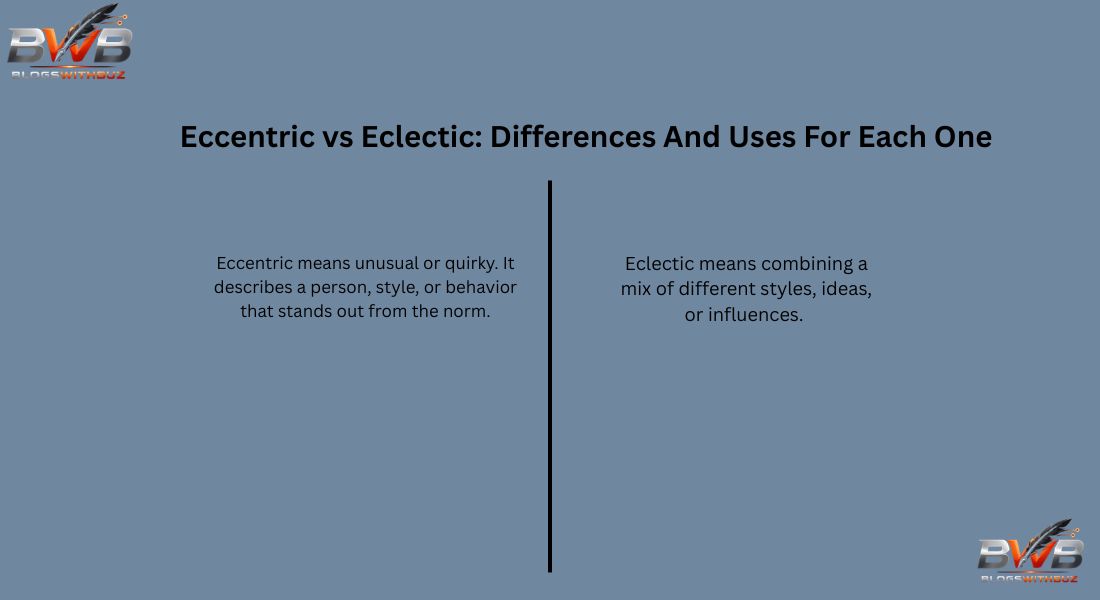
Eccentric means unusual or quirky, while eclectic refers to a mix of different styles, tastes, or influences. Understanding the difference helps you describe people, fashion, behavior, or interior design clearly. An eccentric person shows unique habits, odd choices, or unconventional personality traits that stand out. For example, an eccentric artist might paint at midnight or wear colorful, mismatched clothes.
On the other hand, eclectic highlights diversity and variety, such as a wardrobe combining modern, vintage, and cultural pieces or a living room decorated with multiple styles. Using eccentric and eclectic correctly improves your writing, speech, and communication, making your descriptions precise and expressive.
Paying attention to context, culture, and personal preference ensures you capture quirky behavior or broad-ranging interests accurately. By knowing these differences, you can describe individuality, creativity, and carefully curated collections clearly to any reader.
Define Eccentric
Eccentric means unusual or quirky. It describes a person, style, or behavior that stands out from the norm. An eccentric individual often shows unique habits, odd choices, or unconventional personality traits that attract attention and spark curiosity. This can appear in fashion, speech, lifestyle, or creative work.
Eccentricity highlights individuality, creativity, and idiosyncratic behavior without implying anything negative. Using “eccentric” helps describe quirky people, distinctive styles, or unusual actions clearly, making your writing and communication precise, expressive, and easy for readers to understand.
Define Eclectic
Eclectic means combining a mix of different styles, ideas, or influences. It describes a person, taste, or space that draws from varied sources, cultures, or genres to create something unique and interesting. An eclectic wardrobe might blend modern, vintage, and cultural pieces, while an eclectic living room could mix furniture, colors, and art from multiple styles.
Eclectic highlights diversity, variety, and intentional creativity, showing wide-ranging interests and well-curated choices. Using “eclectic” helps describe tastes, collections, or designs clearly, making your writing and communication engaging, precise, and expressive.
How To Properly Use The Words In A Sentence
To use eccentric and eclectic correctly, first understand their meanings. Eccentric describes quirky habits or unusual behavior, while eclectic highlights diverse tastes, styles, or influences. Choosing the right word ensures your writing, speech, and descriptions are clear, precise, and expressive. Pay attention to context, culture, and personal style to communicate ideas accurately.
How To Use “Eccentric” In A Sentence
Use “eccentric” to describe someone with quirky behavior, unusual habits, or unconventional personality traits. It emphasizes distinctiveness, creativity, and individuality. Examples:
- The eccentric artist painted murals only at midnight.
- My neighbor’s eccentric habits, like wearing mismatched socks, make him memorable.
- She has an eccentric sense of humor that always makes friends laugh.
Using “eccentric” highlights odd yet appealing traits in people, style, or actions clearly without confusing readers.
How To Use “Eclectic” In A Sentence
Use “eclectic” to show diverse tastes, wide-ranging interests, or a mix of styles and influences. It emphasizes variety, creativity, and well-curated collections. Examples:
- Her eclectic wardrobe blends vintage, modern, and cultural pieces beautifully.
- The café’s eclectic menu offers dishes inspired by cuisines from around the world.
- His eclectic music collection includes jazz, rock, classical, and indie albums.
Using “eclectic” highlights diversity in style, personality, or collections, making your descriptions accurate and engaging.
More Examples Of Eccentric & Eclectic Used In Sentences
Understanding eccentric vs eclectic becomes easier when you see them in real sentences. Eccentric emphasizes quirky habits, unusual behavior, or unique personality traits, while eclectic shows diverse tastes, varied styles, and broad-ranging interests.
Examples Of Using Eccentric In A Sentence
- The eccentric artist wore bright, mismatched clothes and painted at midnight.
- My eccentric neighbor collects old typewriters and arranges them in his garden.
- She has an eccentric sense of humor that surprises everyone.
- His eccentric wardrobe includes hats and shoes that never match.
- The eccentric scientist built machines that seemed impossible but worked perfectly.
- His eccentric habits, like talking to plants, fascinated his friends.
- The billionaire’s eccentric lifestyle included owning a private zoo at home.
- The novel’s eccentric characters added charm and uniqueness to the story.
- Her eccentric personality made her stand out at every social gathering.
- The old man’s eccentric collection of clocks fascinated the entire neighborhood.
These sentences show quirky behavior, unconventional style, and unique personality traits clearly.
Examples Of Using Eclectic In A Sentence
- Her eclectic wardrobe blends modern fashion with vintage pieces beautifully.
- The eclectic menu offers dishes from Italy, Japan, and Mexico.
- His eclectic taste in music ranges from classical symphonies to punk rock.
- The interior designer created an eclectic living room mixing old and new furniture.
- The band’s eclectic style draws from jazz, rock, and electronic music.
- The museum has an eclectic collection of paintings, sculptures, and artifacts.
- His eclectic book collection includes novels, biographies, and poetry from around the world.
- The festival featured eclectic performances, combining dance, music, and theater.
- She decorated her home in an eclectic style, blending cultural influences thoughtfully.
- The café’s eclectic atmosphere attracts people with diverse interests and tastes.
These examples highlight variety, diversity, and creativity in tastes, styles, and collections, helping readers understand broad-ranging influences.
Common Mistakes To Avoid
Many people confuse eccentric vs eclectic and use them incorrectly. Understanding the difference ensures your writing and speech remain clear, precise, and expressive.
1. Using Eccentric And Eclectic Interchangeably
Eccentric highlights quirky habits, unusual behavior, or odd personality traits, while eclectic emphasizes diverse tastes, varied styles, and broad-ranging influences. Using them interchangeably can misrepresent people, fashion, or collections. For example, calling a person with unique fashion choices “eclectic” instead of “eccentric” changes the meaning.
2. Using Eccentric As A Synonym For Crazy
Eccentric behavior is quirky and unconventional, not a sign of mental illness. Using “eccentric” to mean crazy is incorrect and disrespectful. For instance, an eccentric artist painting unusual subjects is creative and distinctive, not insane.
3. Using Eclectic To Describe Something Random
Eclectic describes carefully chosen, diverse elements, not random combinations. An eclectic wardrobe or interior design reflects thoughtfulness, variety, and intentional creativity. Avoid using it for haphazard or unplanned mixes.
Tips For Avoiding These Mistakes
- Use eccentric for quirky habits, unusual behavior, or unique personality traits.
- Use eclectic for diverse tastes, varied styles, or curated collections.
- Pay attention to context, culture, and personal preference to communicate accurately.
- Remember that eclectic is intentional diversity, not randomness.
Following these tips ensures your writing and speech clearly express individuality, creativity, and variety.
Context Matters
Understanding eccentric vs eclectic depends on context. Eccentric behavior shows quirky habits or unusual personality traits, while eclectic style highlights diversity, variety, and well-curated choices. Choosing the right word ensures your writing and speech are clear, precise, and expressive. Paying attention to context, culture, and personal preference helps convey individuality, creativity, and wide-ranging interests accurately.
Examples Of Different Contexts
Eccentric and eclectic can appear in many areas of life:
- Fashion: A person’s outfit can be eccentric (quirky, bold choices) or eclectic (mix of styles from various cultures).
- Interior Design: An eccentric room features unusual layouts or decorations, while an eclectic room blends multiple styles and colors thoughtfully.
- Behavior: Eccentric habits might include talking to plants or unusual routines; eclectic interests might include multiple hobbies, like music, art, and cooking.
Personal Style
In personal style, eccentric shows bold, unconventional, or quirky choices that make someone stand out. For example, wearing mismatched shoes or colorful robes is eccentric.
Eclectic style, on the other hand, combines diverse clothing, accessories, and cultural influences. A wardrobe that mixes vintage, modern, and traditional pieces thoughtfully is eclectic. Using these words correctly helps express personality clearly and showcase creativity and individuality.
Behavior
When describing behavior:
- Eccentric behavior highlights unique habits, odd routines, or unconventional actions that stand out.
- Eclectic behavior emphasizes diverse interests, adaptability, and curiosity, like enjoying multiple hobbies or exploring different cultures.
Understanding eccentric vs eclectic behavior allows clear communication of quirky traits versus broad-ranging interests, ensuring your descriptions are precise and engaging.
Exceptions To The Rules
While understanding eccentric vs eclectic is important, there are some exceptions to keep in mind. Personal preference, context, culture, and history can affect how these words are used.
1. Personal Preference
Sometimes people describe their habits or tastes based on what feels right to them. For example, someone may call a bold outfit eccentric or a mixed-style wardrobe eclectic, even if it doesn’t follow standard rules. Respecting personal preference allows flexibility while accurately describing quirky behavior or diverse styles.
2. Contextual Usage
The meaning of eccentric and eclectic often changes with context. An eccentric outfit might highlight a unique personality in fashion, while an eclectic wardrobe shows variety and creativity. Paying attention to context ensures your writing and speech remain clear and precise.
3. Cultural Differences
Different cultures view eccentricity and eclecticism differently. In one culture, eccentric behavior may be admired, while in another, eclectic style is more common and trendy. Recognizing cultural differences ensures respectful and accurate usage.
4. Historical Usage
Over time, the meanings of eccentric and eclectic have evolved. In history, eccentric behavior described quirky habits of famous artists or scientists, while eclectic style referred to collections or tastes influenced by multiple cultures. Understanding history helps describe creativity, individuality, and diverse influences correctly.
Practice Exercises
Practicing with exercises helps you understand and use eccentric and eclectic correctly in everyday writing and speech.
Exercise 1: Fill In The Blank
Choose the correct word (eccentric or eclectic) to complete each sentence:
- Her __________ wardrobe mixes vintage, modern, and cultural pieces from around the world.
- The __________ scientist built unusual machines that amazed everyone in his lab.
- The café’s __________ menu features dishes inspired by Italy, Japan, and Mexico.
- Despite his __________ habits, the musician is widely admired for creativity.
- His home reflects an __________ style, blending art, furniture, and music from various cultures.
Answer Key:
- eclectic
- eccentric
- eclectic
- eccentric
- eclectic
Exercise 2: Sentence Writing
Write your own sentences using eccentric and eclectic to describe people, fashion, behavior, or collections. Examples:
- Eccentric: The eccentric artist wears bright colors and paints unusual subjects that amaze everyone.
- Eclectic: Her eclectic wardrobe mixes vintage, modern, and cultural pieces, showing her diverse tastes.
Practicing in this way helps you describe quirky habits, unusual behavior, diverse interests, and well-curated collections accurately.
Conclusion
Understanding eccentric vs eclectic helps you describe people, behavior, fashion, or collections clearly and accurately. Eccentric highlights quirky habits, unusual behavior, and unique personality traits, while eclectic emphasizes diverse tastes, varied influences, and intentional creativity. Paying attention to context, culture, personal preference, and historical usage ensures correct usage in writing and speech. Practicing with examples and exercises strengthens your ability to use these words naturally. By mastering the difference, you can express individuality, creativity, and well-curated collections confidently, making your communication precise, expressive, and engaging for any reader.
Key Takeaways
- Eccentric shows quirky habits, unusual behavior, and unconventional traits.
- Eclectic highlights diverse tastes, styles, and wide-ranging influences.
- Context, culture, and personal preference affect the correct use of these words.
- Using them properly improves clarity, precision, and expressiveness in writing or speech.
- Practicing examples and exercises ensures accurate communication of personality, style, and curated collections.
FAQs
What is the difference between eccentric and eclectic?
Eccentric highlights quirky habits, unusual behavior, and unique personality traits. Eclectic emphasizes diverse tastes, varied influences, and well-curated collections.
Can eccentric and eclectic be used interchangeably?
No. Eccentric and eclectic have distinct meanings. Using them interchangeably can misrepresent quirky behavior or diverse styles. Context and intent matter.
Is eccentric the same as crazy?
No. Eccentric shows unconventional or quirky traits, not mental illness. It respects individuality while describing unique habits or personality.
Does eclectic mean random?
Not exactly. Eclectic reflects careful selection of diverse styles, tastes, or influences. It is intentional, not haphazard or random.
Read more: