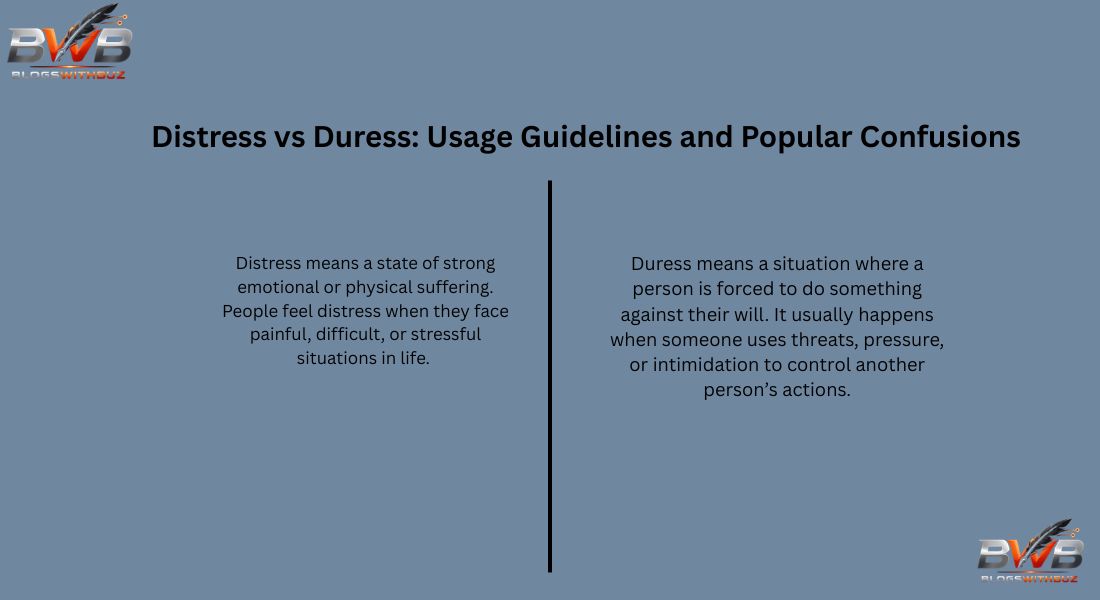
The main difference between distress and duress is simple. Distress means emotional or physical suffering, while duress means being forced to do something against your will. Many people confuse these words because they sound similar, but their meanings are very different.
In English grammar, distress is often used to describe emotional distress, mental pain, financial distress, or physical discomfort. For example, a person may feel distress after losing a job or hearing sad news. It shows a state of suffering or anxiety.
Duress, however, is mostly used in legal contexts. It describes a situation where someone is pressured, threatened, or coerced into doing something. For instance, signing a contract under duress means the person was forced to sign it.
Understanding the difference between distress and duress helps improve vocabulary and prevents common grammar mistakes. Learning how to use these confusing English words correctly makes writing clearer and more accurate.
Define Distress
Distress means a state of strong emotional or physical suffering. People feel distress when they face painful, difficult, or stressful situations in life. It often includes feelings like anxiety, sadness, fear, or mental pressure.
For example, someone may experience emotional distress after losing a loved one or going through a serious problem. Distress can also appear as financial distress, health concerns, or physical discomfort. In psychology, distress describes a negative emotional state that affects a person’s thoughts and behavior.
Doctors may also use terms like respiratory distress to explain serious physical conditions. Understanding the meaning of distress helps people use the word correctly in English communication.
Define Duress
Duress means a situation where a person is forced to do something against their will. It usually happens when someone uses threats, pressure, or intimidation to control another person’s actions. In many cases, the word duress appears in legal contexts. For example, a person may sign a contract or make a confession under duress if they fear harm or punishment.
This type of coercion can be physical or psychological. In law, proving legal duress can make an agreement invalid because the decision was not made freely. Understanding the meaning of duress helps people use this term correctly and avoid confusing it with emotional distress.
How To Properly Use The Words In A Sentence
To properly use distress and duress in a sentence, you must understand their meanings and the context. Distress describes emotional pain, mental suffering, or physical discomfort. People often use it when talking about sadness, anxiety, financial problems, or difficult life situations.
Duress, however, refers to pressure, threats, or coercion that force someone to act against their will. This word appears frequently in legal or serious situations. Knowing the difference between distress and duress helps avoid common grammar mistakes and improves clear communication in English writing.
How To Use Distress In A Sentence
Use distress when describing emotional distress, physical suffering, or difficult conditions. It explains how someone feels during a painful or stressful situation. For example, a person may feel distress after hearing bad news or facing financial distress. The word can also describe a situation that causes worry or discomfort. In simple terms, distress focuses on a state of suffering or anxiety rather than force.
Example sentences:
- She felt deep distress after hearing the tragic news.
- The company faced financial distress during the economic crisis.
- The lost hiker sent a distress signal for help.
How To Use Duress In A Sentence
Use duress when someone is forced or pressured to do something against their will. The word often appears in legal discussions about coercion, threats, or intimidation. When a person acts under duress, it means they did not act freely but were pushed by fear or pressure. This is why duress is important in legal language and contract law.
Example sentences:
- The suspect said he confessed under duress.
- She signed the agreement under duress because she felt threatened.
- The witness claimed the statement was given under duress.
More Examples Of Distress & Duress Used In Sentences
Understanding the difference between distress and duress becomes easier when you see how these words appear in real sentences. Distress usually describes emotional suffering, physical pain, or difficult situations.
Duress, however, describes pressure, threats, or coercion that force someone to act against their will. Looking at examples helps learners understand proper word usage and avoid confusing these commonly misused English words.
Examples Of Using Distress In A Sentence
Here are some simple examples showing how distress is used to describe emotional or physical suffering:
- The loud thunder caused distress to the small child.
- She felt deep emotional distress after hearing the bad news.
- The family faced financial distress after the business closed.
- The injured climber showed signs of physical distress.
- The storm placed many coastal villages in serious distress.
- He sent a distress signal when his boat stopped working.
- The patient was in distress because of severe pain.
Examples Of Using Duress In A Sentence
These examples show how duress describes force, pressure, or threats in different situations:
- The suspect said he confessed under duress.
- She signed the contract under duress because she felt threatened.
- The witness claimed the statement was given under duress.
- The victim was forced to cooperate under duress.
- The employee said he resigned under duress from his manager.
- The defendant argued that he acted under legal duress.
- The hostage remained under duress until help arrived.
Common Mistakes To Avoid
Many people confuse distress and duress because the words look and sound similar. However, they have very different meanings in English. Distress describes emotional pain, mental suffering, or physical discomfort. Duress, on the other hand, refers to pressure, threats, or coercion that force someone to act against their will. Mixing these words can create confusion in writing and speaking. Understanding their meanings and contexts helps avoid common grammar mistakes and improves clear communication.
Mistake #1: Using “Distress” When You Mean “Duress”
One common mistake is using distress when the situation actually involves force or threats. Remember that distress describes emotional suffering, not coercion.
Incorrect example:
- I signed the contract under distress.
Correct example:
- I signed the contract under duress.
In this case, duress is correct because the person was forced or pressured to sign.
Mistake #2: Using “Duress” When You Mean “Distress”
Another mistake happens when people use duress to describe emotional pain or sadness. In such situations, distress is the correct word.
Incorrect example:
- She felt duress after the breakup.
Correct example:
- She felt distress after the breakup.
Here, the sentence describes emotional suffering, so distress fits the context.
Tips For Avoiding These Mistakes
You can avoid confusing distress vs duress by remembering their key meanings. Use distress when talking about emotional distress, mental suffering, or physical discomfort. Use duress when someone faces threats, pressure, or coercion. Always check the context of the sentence before choosing the word. If you are unsure, consult a dictionary or review example sentences to confirm the correct usage.
Context Matters
When choosing between distress and duress, context is very important. These words may sound similar, but they describe different situations. Distress relates to emotional suffering or physical discomfort, while duress refers to pressure, threats, or coercion that force someone to act against their will.
Understanding the situation helps you select the correct word and avoid common vocabulary mistakes. In English writing and communication, using the right word improves clarity and prevents confusion.
Distress
Distress describes a state of emotional distress, mental pain, or physical suffering. People often use this word when talking about difficult life situations such as financial problems, health issues, or personal loss. For example, a person may feel emotional distress after losing a loved one or facing serious challenges.
The word can also appear in medical terms like respiratory distress, which describes breathing difficulty. In general, distress focuses on a person’s feelings or painful condition rather than force.
Duress
Duress describes a situation where someone acts because of threats, pressure, or coercion. This term often appears in legal contexts, especially when a person claims they acted under duress.
For example, someone might sign a contract or give a statement under duress if they fear harm or intimidation. In law, proving legal duress may show that a decision was not made freely. Unlike distress, duress focuses on forced actions rather than emotional suffering.
Exceptions To The Rules
In most situations, distress describes emotional or physical suffering, while duress refers to pressure or threats that force someone to act against their will. However, language sometimes includes exceptions where these words appear in more specific contexts.
Understanding these exceptions helps improve vocabulary and ensures correct word usage in both everyday English and professional communication.
Distress
Although distress usually refers to emotional distress or mental suffering, it can also appear in medical and legal contexts. In medicine, doctors may use terms like respiratory distress to describe serious breathing difficulty.
In law, emotional distress may refer to psychological harm caused by another person’s actions. For example, a court case may include claims for damages due to emotional distress. In these cases, the word still relates to suffering but appears in specialized fields such as healthcare and law.
Duress
Duress mainly appears in legal language, but it can also apply to other situations involving pressure or coercion. For example, in contract law, a person may argue that they signed an agreement under duress because of threats or intimidation.
In military or extreme situations, someone might claim they acted under duress when forced to follow orders. These examples show that duress always involves force or strong pressure, even when the context changes.
Practice Exercises
Practicing the use of distress and duress helps you remember their differences and use them correctly in writing and speaking. Try the exercises below to improve your understanding.
Exercise 1: Fill In The Blank
Choose the correct word (distress or duress) to complete the sentences:
- After the car accident, she was in a state of __________.
- The kidnapper put the victim under __________ to force a confession.
- He experienced emotional __________ after losing his job.
- The bank robber put the teller under __________ to get access to the vault.
- The hiker was in __________ after getting lost in the woods.
Answer Key:
- distress
- duress
- distress
- duress
- distress
Exercise 2: Sentence Writing
Write a sentence using each word correctly. Here are some examples:
- Distress: She was in great distress after hearing the news.
- Duress: The suspect confessed under duress.
- Distress: The company was in financial distress.
- Duress: The hostage was held under duress for several days.
- Distress: The storm caused distress to the coastal community.
Exercise 3: Multiple Choice
Choose the correct word (distress or duress) for each sentence:
- __________ is a state of extreme emotional pain or suffering.
- a) Duress
- b) Distress
- a) Duress
- __________ is the use of force or threats to make someone do something.
- a) Distress
- b) Duress
- a) Distress
- When someone is in __________, they are not able to make rational decisions.
- a) Distress
- b) Duress
- a) Distress
- Being held at gunpoint is an example of __________.
- a) Distress
- b) Duress
- a) Distress
- When a company is in financial __________, it may have to lay off employees.
- a) Duress
- b) Distress
- a) Duress
Answer Key:
- Distress
- Duress
- Distress
- Duress
- Distress
Conclusion
In summary, distress and duress are often confused, but they have very different meanings. Distress refers to emotional or physical suffering, such as sadness, anxiety, or financial problems, while duress describes situations where someone is forced to act against their will through threats or pressure. Using the correct word in the right context is essential to avoid confusion and communicate clearly. By understanding the difference between distress and duress, paying attention to context, and practicing with examples, you can improve your English vocabulary and grammar. Remember, distress focuses on feelings or suffering, and duress focuses on coercion or force. Proper usage ensures that your writing and speech are precise, professional, and easy to understand.
Key Takeaways
- Distress means emotional, mental, or physical suffering.
- Duress means being forced or pressured to act against your will.
- These words sound similar but have very different meanings.
- Context matters: use distress for feelings or pain, and duress for coercion or threats.
- Common mistakes occur when these words are used interchangeably; careful usage avoids confusion.
- Legal, medical, and emotional contexts may have exceptions in word usage.
- Practicing with examples, sentences, and exercises helps master the correct usage.
Read more: