The correct word to use is cheer, not chear. Cheer is a verb and a noun that shows joy, encouragement, or support, while chear is an obsolete and incorrect form of the word. People often confuse them because they sound the same, but spelling matters in writing. You can cheer someone up, applaud a team, or express happiness using the word cheer.
As a noun, cheer can also mean a state of happiness, optimism, or comfort, or even festive food and drinks during celebrations. On the other hand, chear is rarely used and is considered old-fashioned.
When writing emails, messages, or formal content, always use cheer to avoid mistakes. Remember, cheer works in both spoken and written English to show joy, praise, encouragement, or emotional support, making your sentences clear and correct.
Definitions Of Cheer: What Is The Meaning Of Cheer?
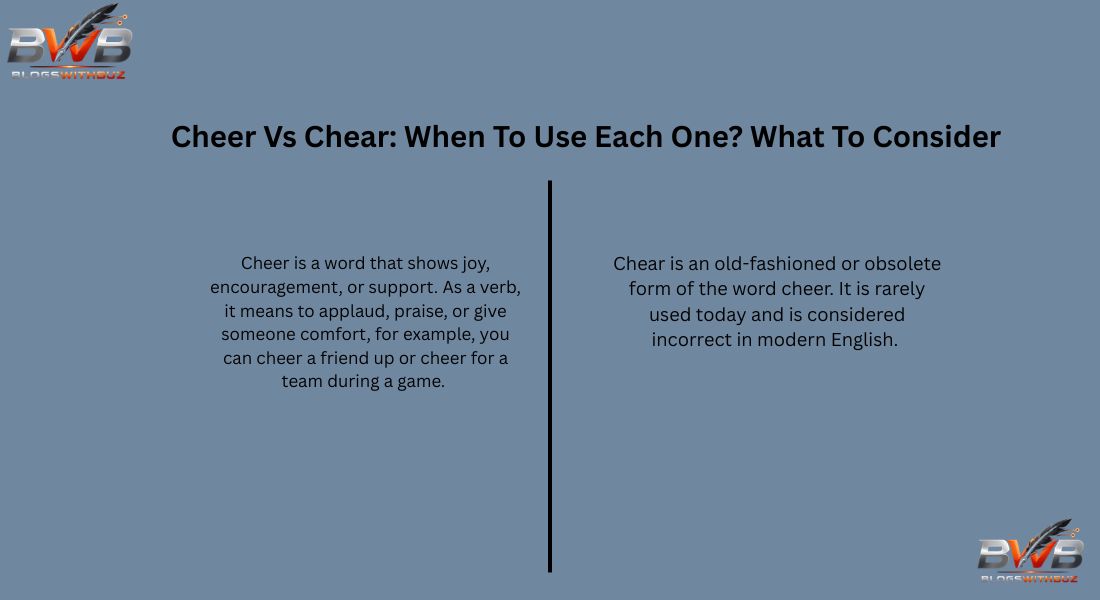
Cheer is a word that shows joy, encouragement, or support. As a verb, it means to applaud, praise, or give someone comfort, for example, you can cheer a friend up or cheer for a team during a game. As a noun, cheer refers to a shout of happiness, optimism, or encouragement, or even a festive mood or celebration with food and drinks.
Cheer also represents a positive state of mind, spreading joy, pleasure, or emotional support to others. Using cheer correctly in sentences improves clarity, shows proper spelling, and helps convey happiness, praise, or encouragement naturally.
Definitions Of Chear: What Is The Meaning Of Chear?
Chear is an old-fashioned or obsolete form of the word cheer. It is rarely used today and is considered incorrect in modern English. Some people might write chear by mistake because it sounds the same as cheer, but spelling matters, especially in writing.
Unlike cheer, which shows joy, encouragement, praise, or comfort, chear does not have its own active meaning and is no longer recognized in dictionaries as standard English. To write clearly and avoid confusion, always use cheer in sentences when expressing happiness, support, or positive emotions.
How To Properly Use Cheer In A Sentence
To write correctly, always use cheer instead of chear. Cheer can be both a verb and a noun, so understanding its role in a sentence is important.
As a verb – to show support or encouragement:
- “The fans cheered the players after the amazing goal.”
- “Cheer your friend up when they feel sad.”
As a verb – to applaud or praise vocally:
- “Everyone cheered loudly at the end of the performance.”
- “The crowd cheered the singer’s outstanding performance.”
As a noun – a shout of joy, happiness, or praise:
- “A loud cheer erupted when the team won.”
- “The office was filled with holiday cheer.”
As a noun – a positive or happy state of mind:
- “She always spreads cheer wherever she goes.”
- “A little cheer can brighten someone’s day.”
As a noun – festive food or celebration:
- “We enjoyed the birthday cheer with cake and drinks.”
How To Properly Use Chear In A Sentence
The word chear is an old-fashioned and obsolete form of cheer. In modern English, it is no longer considered correct. Using chear in your writing can confuse readers and appear careless. Therefore, it is best to avoid this word in sentences entirely. Unlike cheer, which conveys joy, praise, or support, chear has no active meaning today and is not recognized in standard dictionaries. If you come across chear in old texts, it simply represents the historical spelling of cheer.
Examples (What Not to Do):
- ❌ “The crowd cheared loudly for the team.” → Incorrect, use cheered instead.
- ❌ “She tried to chear her friend up.” → Incorrect, use cheer instead.
- ❌ “Everyone gave a big chear after the show.” → Incorrect, use cheer instead.
Tip: Always replace chear with cheer in writing for clarity and correctness.
Cheer Vs Chear: Fun Facts About These Words
First, never use cheer alone as an expression, you need to add a phrase like “cheer them up” or use the correct word form “cheers.”
You often see cheers in messages and emails as a friendly sign-off. It is simple, positive, and works well in both formal and informal communication.
Another common use of cheers is at parties or celebrations. People chant “cheers” when clinking glasses, celebrating good moments, or giving a toast. It symbolizes joy, happiness, and togetherness.
Interestingly, in medieval times, cheer referred to someone’s facial expression, mood, or spirit rather than a shout of happiness. It was only after the 1300s that the word became associated with joy, praise, and celebration, showing how English has evolved over time.
List Of Examples Of Cheer And Chear In Your Sentences
Since chear is obsolete, all examples focus on cheer, the correct word to use.
Examples with Cheer as a Verb:
- “The crowd cheered loudly when the team scored a goal.”
- “Cheer your friend up when they feel sad.”
- “Everyone came out to cheer the runners at the marathon.”
- “She tried to cheer her colleague after the presentation.”
Examples with Cheer as a Noun:
- “The office was full of holiday cheer.”
- “A loud cheer erupted after the singer finished the song.”
- “He brought some gifts to spread cheer among the children.”
- “There was a morning cheer when everyone greeted each other happily.”
Important Tip: Avoid using chear in sentences, it is outdated and not recognized in modern English. Always use cheer for clarity and correctness.
Practice Exercises: Cheer Vs Chear
Exercise 1: Fill in the Blank
Choose the correct word (cheer or chear) to complete each sentence:
- The crowd ___ loudly when their team won the match.
- She wanted to ___ up her friend after a tough day.
- The office was full of holiday ___ during the party.
- Everyone gave a loud ___ at the singer’s performance.
- He mistakenly wrote ___ instead of the correct word.
Exercise 2: Write a Sentence
Use the word cheer correctly in your own sentence. Make sure it shows joy, encouragement, or support.
Example: “I brought flowers to cheer my friend after her exam results.”
Tip: Remember, chear is obsolete and should never be used in modern writing. Always use cheer.
Conclusion
The correct word to use is cheer, while chear is old-fashioned and no longer correct. Cheer can be a verb or noun, used to show joy, encouragement, praise, or comfort. You can cheer someone up, celebrate a moment, or express happiness through words, actions, or a shout of joy. Cheer also appears in emails, messages, and celebrations as cheers, spreading positivity. Always use cheer in writing and avoid chear to ensure clarity and correctness. Understanding the meanings and proper use of cheer helps you write confidently and express happiness naturally.
Key Takeaways: Cheer Vs Chear
- Cheer is the correct modern English word; chear is obsolete and should be avoided.
- Cheer can be a verb (to praise, encourage, or support) or a noun (joy, happiness, or festive celebration).
- Use cheer in sentences like “Cheer your friend up” or “The crowd gave a loud cheer.”
- Cheer appears in emails or messages as “cheers” to show positivity.
- Understanding the difference ensures clear, correct writing and helps convey joy, encouragement, and emotional support effectively.
Frequently Asked Questions: Cheer Vs Chear
What is the difference between cheer and chear?
Cheer is the correct modern word showing joy, encouragement, or support. Chear is old-fashioned and obsolete.
Can I use chear in writing today?
No. Chear is no longer accepted in modern English. Always use cheer to avoid mistakes.
How can I use cheer correctly in a sentence?
Use cheer as a verb to encourage or praise (“Cheer your friend up”) or as a noun to show happiness or celebration (“The room was full of cheer”).
Read more: