Many people often get confused between sleave vs sleeve. These two words look similar but have completely different meanings. Using the wrong one can make your sentence confusing or even incorrect. In this article, we will explain the difference between sleave and sleeve, their origins, definitions, examples, synonyms, and common mistakes people make. By the end, you will know exactly when to use sleave or sleeve and never mix them up again.
Definition of Sleeve
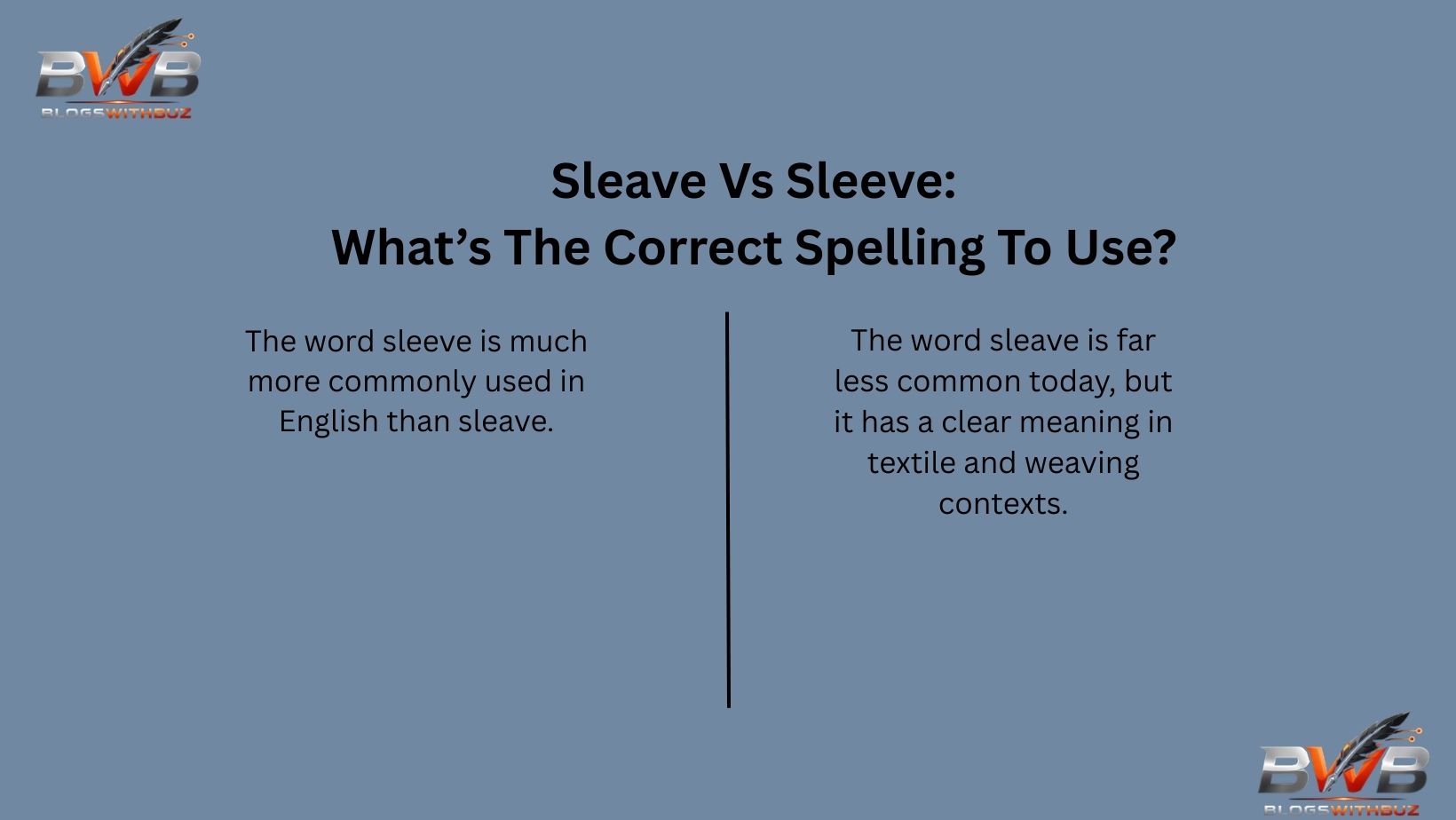
The word sleeve is much more commonly used in English than sleave.
- In clothing: A sleeve is the part of a garment that covers your arm. For example, “I wore a coat with long sleeves today.” Sleeves can be short, long, flared, or even decorative like lace sleeves.
- In medicine: Sleeve can refer to surgical procedures. For example, “sleeve lobectomy” or “sleeve resection” are medical terms used in surgeries related to the lungs or trachea.
- In engineering: A sleeve can be a tubular piece used to connect pipes or cover a joint. For instance, a rubber sleeve may be used to protect a mechanical part.
- In water or geography: Sleeve may refer to a narrow channel of water.
- In music and media: A sleeve can mean the cover of an album, like the famous sleeve art of Pink Floyd’s A Momentary Lapse of Reason.
So, sleeve has many meanings depending on the context, but it is always spelled S-L-E-E-V-E.
Emaculate vs Immaculate: Which One Is The Correct One?
Definition of Sleave
The word sleave is far less common today, but it has a clear meaning in textile and weaving contexts.
- Textile meaning: A sleave is a knotted or entangled part of silk or thread. It also refers to silk that is not yet twisted, called floss silk.
- Verb usage: To sleave means to separate threads or divide a collection of threads. It is a technical term used by weavers.
For example, you could say:
- “The weaver carefully sleaved the silk before starting the loom.”
- “My daughter was playing with the sleaves of her cardigan.”
In short, sleave definition is very specific to silk, thread, or weaving. People rarely use this word outside of these contexts.
Is “Sleave” Just a Misspelling of “Sleeve”?
Many people mistakenly write sleave when they mean sleeve. While the spelling is similar, they are not interchangeable.
- Use sleeve for clothes, pipes, medical procedures, and album covers.
- Use sleave only when talking about untwisted silk or separating threads.
So, next time you are writing about your shirt or jacket, do not write sleave, always use sleeve.
Origin Of The Words “Sleave” And “Sleeve”
Understanding the origin of words helps remember their meanings.
- Sleeve: Comes from the Old English word slēfe, meaning “arm covering.” It has been used in clothing since medieval times.
- Sleave: Comes from weaving terminology, linked to “slay,” a term in textile weaving. It originally referred to separating threads on a loom.
Knowing their origin makes it easier to distinguish sleave vs sleeve in writing.
How To Use “Sleave” And “Sleeve” In Sentences
Here are some practical examples:
Using Sleeve:
- “I prefer long sleeves in winter.”
- “The surgeon performed a sleeve gastrectomy.”
- “He wore gloves and a short-sleeved shirt.”
- “The prosthesis had a rubber sleeve to fit the limb properly.”
- “The album sleeve for Pink Floyd’s record was iconic.”
Using Sleave:
- “The weaver separated the silk into neat sleaves before starting the loom.”
- “She noticed a tangled sleave of floss silk in the basket.”
- “Carefully sleaving threads ensures smooth weaving.”
- “The textile student learned how to sleave raw silk.”
- “He examined the sleaves for any knots or defects.”
These examples show clearly when to use sleeve vs sleave.
Tapping vs Taping: When To Use Each One? What To Consider
Synonyms For The Words “Sleave” And “Sleeve”
Sleave synonyms (textile context):
- floss
- untwisted silk
- thread bundle
- tangled silk
- knotted thread
Sleeve synonyms (depending on context):
- arm covering (clothing)
- bushing, thimble (engineering)
- album cover, record sleeve (media)
- catheter sleeve, prosthetic sleeve (medical)
Using synonyms can also help you avoid mistakes between sleave or sleeve.
What Does “Sleeve” Mean In Different Contexts?
Sleeve is versatile. Its meaning changes based on context:
Sleeve in Clothing
A sleeve is the part of a coat, jacket, or shirt that covers the arm. There are short sleeves, long sleeves, puffed sleeves, and even decorative lace sleeves.
Sleeve in Medical Terms
Doctors use “sleeve” in operations like sleeve lobectomy or sleeve resection to describe a type of tissue removal or reconstruction.
Sleeve in Engineering
Mechanical and construction industries use sleeves to cover joints, connect pipes, or protect components. For example, “molded rubber sleeves” help prevent damage to moving parts.
Sleeve in Geography
A sleeve can refer to a narrow water channel or passage.
Sleeve in Music & Media
A sleeve is often the cover of an album or vinyl record. Famous examples include Pink Floyd’s album sleeves.
Examples of Sleeve
- “I rolled up my sleeves before washing the dishes.”
- “The doctor recommended a sleeve gastrectomy.”
- “He wore a leather jacket with long sleeves.”
- “The mechanical pipe sleeve was replaced.”
- “Short-sleeved shirts are perfect for summer.”
- “The prosthetic limb had a sleeve attachment.”
- “The album sleeve was decorated with colorful art.”
- “The engineer fitted a sleeve over the joint.”
- “The surgeon performed a sleeve resection successfully.”
- “The lace sleeves on her dress were beautiful.”
Examples of Sleave
- “She carefully separated the silk into sleaves.”
- “The weaver tied knots in one sleave of thread.”
- “Sleave silk is softer than twisted silk.”
- “He spent hours sleaving threads for the loom.”
- “The textile class learned to identify a damaged sleave.”
- “Sleave threads are often used in high-quality embroidery.”
- “The basket contained several sleaves of fine silk.”
- “The craftsman sleaved the floss silk evenly.”
- “A tangled sleave slowed down the weaving process.”
- “Sleave silk is delicate and requires careful handling.”
Common Mistakes People Make With “Sleave” And “Sleeve”
- Writing sleave when talking about clothing: “I rolled up my sleave” (wrong).
- Using sleeve when talking about silk threads: “He separated the sleeve of silk” (wrong).
- Confusing the spelling in emails, articles, or schoolwork.
Remember: sleeve vs sleave is about context, not spelling similarity.
Conclusion
In conclusion, understanding the difference between sleave vs sleeve is simple once you know the contexts. Sleeve is widely used in clothing, medicine, engineering, and media, while sleave is specific to weaving and untwisted silk threads. People often confuse sleave or sleeve because they sound similar, but using the wrong word can confuse readers. Always ask yourself, “Am I talking about a shirt, a pipe, or silk threads?” This will help you choose sleeve or sleave correctly. Using the correct term not only improves your writing but also makes you appear more precise and professional. Always remember: sleave is for silk, sleeve is for everything else.
FAQs
What is the correct spelling: sleave or sleeve?
Use sleeve for clothes, pipes, surgery, or albums. Use sleave only for silk threads.
Is “sleave” still used in modern English?
Rarely. It is mostly used in weaving, textile studies, or historical texts.
Why do people confuse sleave and sleeve?
They sound similar, but the meanings are very different. Context determines the correct usage.
What does sleeve mean in medical terms?
Sleeve refers to a surgical procedure like sleeve gastrectomy, sleeve resection, or sleeve lobectomy.
Can sleeve have different meanings in different fields?
Yes. Sleeve can refer to clothing, mechanical parts, pipes, medical procedures, or album covers depending on context.
Read more Spelling: