When learning English, small differences between words can cause confusion. Two words that many people mix up are inflexible and unflexible. At first glance, they might look like synonyms, but their usage and correctness differ. This article will help you understand the meaning, usage, and proper context for both words, so you can use them confidently in writing and speaking.
What Does Inflexible Mean?
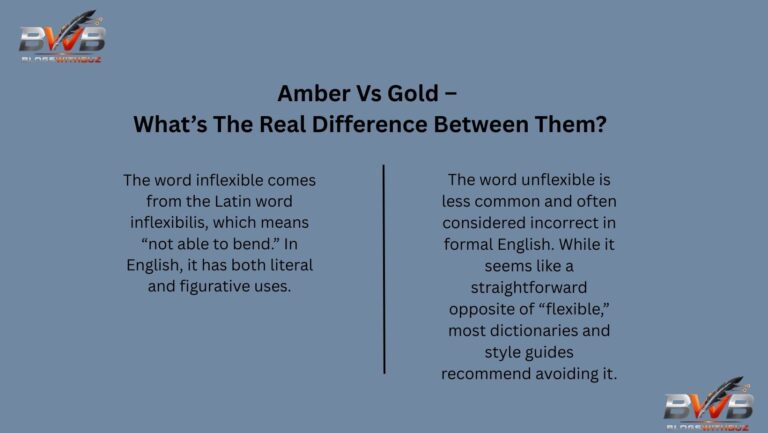
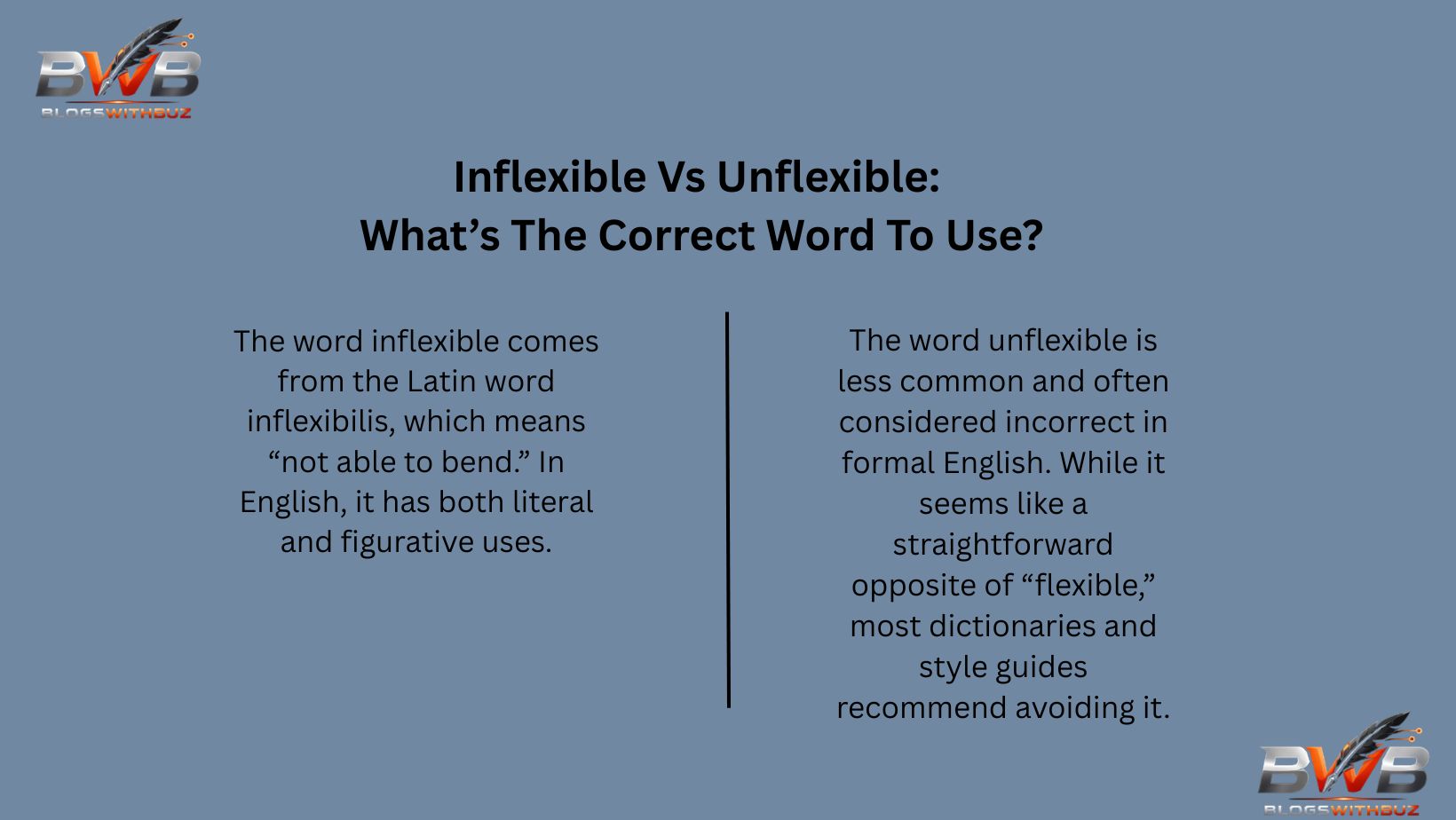
The word inflexible comes from the Latin word inflexibilis, which means “not able to bend.” In English, it has both literal and figurative uses.
Literal Meaning:
Inflexible describes something that is physically stiff or rigid. For example, a metal rod can be inflexible because it cannot bend easily.
Figurative Meaning:
Inflexible is often used to describe people, rules, or situations that do not change. For example, someone can be inflexible in their opinions, meaning they are stubborn or unwilling to adjust their thinking.
Example Sentences:
- The metal beam was inflexible, so it could not be shaped into a curve.
- Her inflexible schedule made it hard to plan meetings with friends.
- The teacher’s inflexible rules did not allow students to submit homework late.
In short, inflexible is widely accepted in English and can describe both objects and people.
What Does Unflexible Mean?
The word unflexible is less common and often considered incorrect in formal English. While it seems like a straightforward opposite of “flexible,” most dictionaries and style guides recommend avoiding it.
Meaning:
Unflexible is intended to mean the same as inflexible—something rigid, stiff, or unable to change.
Why it’s less preferred:
- It is rarely used in modern English.
- It does not appear in many standard dictionaries.
- Using “inflexible” instead sounds more natural and professional.
Example Sentences (Not Recommended in Formal Writing):
- The plastic tube was unflexible and broke easily.
- His unflexible attitude caused problems in the team.
Notice that replacing unflexible with inflexible in these sentences makes them sound smoother and correct.
Origin Of The Words “Inflexible” And “Unflexible”
Inflexible:
- Originates from Latin in- (not) + flexibilis (able to bend).
- First recorded in English around the late 15th century.
Unflexible:
- Formed by adding the prefix un- to “flexible.”
- Less common historically and in modern usage, often considered nonstandard.
Understanding the origin helps explain why inflexible is the accepted term in both spoken and written English.
How To Use “Inflexible” And “Unflexible” In Sentences
Inflexible Usage:
- For objects: “The steel frame was inflexible and could not be bent.”
- For people: “She was inflexible in her decision, refusing to listen to advice.”
- For rules or systems: “The inflexible policy made it hard for employees to request changes.”
Unflexible Usage (Informal/Incorrect):
- “The rope was unflexible and broke under pressure.” → Better: “The rope was inflexible and broke under pressure.”
Tips:
- Always prefer inflexible in formal writing.
- Use unflexible only in casual speech if necessary, though most native speakers avoid it.
Synonyms For “Inflexible” And “Unflexible”
Here are some common synonyms to vary your writing and speaking:
- Rigid – stiff, not easily changed. Example: “The rigid schedule left no room for breaks.”
- Stiff – physically hard or figuratively strict. Example: “His stiff posture showed discomfort.”
- Unyielding – refusing to bend or compromise. Example: “She had an unyielding determination to succeed.”
- Resolute – firm in purpose or belief. Example: “He remained resolute despite the challenges.”
- Immutable – cannot be changed. Example: “Some laws are immutable and cannot be altered.”
- Obstinate – stubborn or unwilling to change. Example: “The child was obstinate about eating vegetables.”
Using these synonyms makes your language more natural and precise, depending on the context.
When To Prefer “Inflexible” Over “Unflexible”
- Grammar and Style: “Inflexible” is correct, widely recognized, and preferred in formal writing.
- Professional Writing: Use “inflexible” in reports, emails, academic writing, or journalism.
- Common Mistakes: Avoid “unflexible,” as it can make your writing sound non-native or awkward.
Tip: If you are unsure, just remember: inflexible is always safe to use.
Other Phrases With “Inflexible”
“Inflexible” can be combined with many nouns to create common phrases:
- Inflexible rules – rules that cannot be changed.
- Inflexible policies – strict policies with no exceptions.
- Inflexible schedule – a timetable that cannot be adjusted.
- Inflexible mindset – someone’s thinking that resists change.
- Inflexible system – a structure or process that cannot adapt.
These phrases are widely used in business, education, and everyday conversation.
Examples Of Inflexible In Sentences
- The company’s inflexible hours frustrated many employees.
- His inflexible stance on the issue angered the team.
- The metal pipe was inflexible and could not be bent.
- Rules that are too inflexible can hurt creativity.
- She showed inflexible loyalty to her beliefs.
- The software had an inflexible design that limited customization.
- Inflexible regulations slowed down the project.
- The old chair was inflexible and uncomfortable.
- His inflexible approach made negotiations difficult.
- Even under pressure, he remained inflexible in his decision.
Examples Of Unflexible In Sentences
- The stick was unflexible and snapped under weight.
- His unflexible attitude caused tension among coworkers.
- The plastic container was unflexible and cracked easily.
- Unflexible deadlines made it hard to finish tasks.
- The unflexible structure failed to handle stress.
- She was unflexible in her opinions.
- The old material was unflexible and hard to shape.
- An unflexible mindset can stop growth.
- The team struggled with unflexible instructions.
- Unflexible policies often lead to dissatisfaction.
Note: In all these sentences, replacing “unflexible” with “inflexible” improves correctness and readability.
Conclusion
In short:
- Inflexible is the correct, standard word to use in English. It works for objects, people, rules, or systems that are stiff, rigid, or unyielding.
- Unflexible is less common and generally considered nonstandard. Most professional writers avoid it.
- When in doubt, always use inflexible to ensure clarity, professionalism, and correctness.
- Use synonyms like rigid, stiff, unyielding, and resolute to make your language varied and precise.
By understanding these differences, you can write and speak English more confidently and naturally.
FAQs
What is the difference between inflexible and unflexible?
Inflexible is standard and correct; unflexible is uncommon and often considered incorrect. Both mean rigid or unwilling to change.
Is “unflexible” considered incorrect?
Yes, in formal English writing, “unflexible” is discouraged. “Inflexible” is the preferred word.
Can “inflexible” be used for people and objects?
Yes. It can describe physical rigidity (objects) or stubbornness/stability (people, rules, systems).
Are “rigid” and “inflexible” interchangeable?
Mostly yes, but “rigid” often emphasizes physical stiffness, while “inflexible” emphasizes unchanging nature or rules.
How do I remember which word to use in writing?
Always choose inflexible for correctness. Avoid “unflexible,” which sounds awkward and nonstandard.
Read more: